Calcite cleavage was observed using a device to accelerate the formation and dissolution of calcitic CaCO3 by acidification in aqueous solutions. Scanning electron microscopy showed that crystals formed within 1 day and dissolution began at 3 days of aging. In the X-ray diffraction pattern, calcite was predominantly formed but an amorphous phase did not exist, even after 12 days of aging. In the diffraction pattern and lattice images obtained using a series of high-resolution transmission electron microscopy analyses, cleavages mainly occurred in the {101̅1} plane and some cleavages were observed through the {101̅4} plane.
Continue reading ‘Cleavage of calcitic CaCO3 during dissolution in aqueous solution’Archive Page 218
Cleavage of calcitic CaCO3 during dissolution in aqueous solution
Published 3 September 2021 Science ClosedTags: chemistry
Human activities worsen warming, acidification, and oxygen loss in the Southern California Bight
Published 3 September 2021 Press releases Closed
Climate Change & Eutrophication: Dynamic Duo
We are all too familiar with climate change and the associated consequences; global warming, ocean acidification, and decreasing oxygen levels in the ocean. All these problems are intensified by the input of excess nutrients into coastal ecosystems. Waters released directly from wastewater treatment plants, or indirectly from agricultural runoff and urban runoff are full of nutrients necessary for phytoplankton growth (nitrogen, phosphorous, and iron). Nutrient rich runoff can trigger coastal eutrophication. Eutrophication is when excess nutrients cause an overabundance of phytoplankton and plants to bloom and quickly decompose, releasing large amounts of carbon dioxide (CO2). Bacteria consume oxygen and produce CO2 while breaking down phytoplankton. Excess CO2 then causes localized acidification. In short, eutrophication can alter ecosystems, make ocean acidification worse, and cause more low-oxygen events.
Upwelling in The Southern California Bight
The Southern California Bight (SCB) is a productive area along the coast of California thanks to wind-driven upwelling. During the spring, winds drive surface waters away from the shore pulling cold, nutrient-rich water up from the deep. While this promotes a lot of phytoplankton growth in the surface waters, the deeper water is typically more acidic (lower pH) and contains less oxygen, making the area more sensitive to climate change. This study explored how anthropogenic (originating from human activity) nutrient inputs and upwelling influence the ecosystem of the SCB through eutrophication.
Modeling Eutrophication in The Southern California Bight
Researchers used models to recreate ocean circulation, atmospheric conditions (e.g., wind dynamics), and even the chemistry (pH, oxygen levels) in the SCB. Data from long-term monitoring programs were used to model the conditions from January 1997-December 2000 with (ANTH simulation) and without (CTRL simulation) anthropogenic nutrient inputs. The simulations were then compared to determine the effects of excessive nutrient inputs on the carbon, nitrogen, and oxygen cycles of the SCB.
Continue reading ‘Human activities worsen warming, acidification, and oxygen loss in the Southern California Bight’Workshop: application of ocean science and technology for the practice of sustainable “blue economy” in developing countries
Published 3 September 2021 Events ClosedDate: 8 – 9 November 2021
Location: virtual
…
Workshop objectives:
The overarching objective of the Workshop is to highlight the role of ocean science and technology in blue economic development. The Workshop will introduce current concepts in blue economy, followed by discussion of specific topics that include coastal marine resources of economic relevance, environmental threats that endanger blue economic goals, the importance of ocean observing systems and the need for capacity development. By illuminating the use and misuse of Science and Technology in blue economies, the Workshop aims to help establish the foundation of scientific knowledge and ocean observations to support sustainable ocean development.
Topics to be covered:
Resources
- Coral Reefs
- Seagrasses and Mangroves
- Coastal Fisheries
- Coastal Freshwater
- Tourism
- Oil and Gas
- Minerals
Threats
- Coastal Pollution
- Harmful Algae
- Ocean Acidification
- Climate Change and Coastal Ocean
Observations
- Role of Sustained Ocean Observations to the Society and Blue economy
Capacity Development
- Building Capacity for Ocean Science and Technology
…
Continue reading ‘Workshop: application of ocean science and technology for the practice of sustainable “blue economy” in developing countries’Tolerant larvae and sensitive juveniles: integrating metabolomics and whole-organism responses to define life-stage specific sensitivity to ocean acidification in the American lobster
Published 2 September 2021 Science ClosedTags: biological response, calcification, crustaceans, laboratory, morphology, mortality, North Atlantic, physiology, reproduction
Bentho-pelagic life cycles are the dominant reproductive strategy in marine invertebrates, providing great dispersal ability, access to different resources, and the opportunity to settle in suitable habitats upon the trigger of environmental cues at key developmental moments. However, free-dispersing larvae can be highly sensitive to environmental changes. Among these, the magnitude and the occurrence of elevated carbon dioxide (CO2) concentrations in oceanic habitats is predicted to exacerbate over the next decades, particularly in coastal areas, reaching levels beyond those historically experienced by most marine organisms. Here, we aimed to determine the sensitivity to elevated pCO2 of successive life stages of a marine invertebrate species with a bentho-pelagic life cycle, exposed continuously during its early ontogeny, whilst providing in-depth insights on their metabolic responses. We selected, as an ideal study species, the American lobster Homarus americanus, and investigated life history traits, whole-organism physiology, and metabolomic fingerprints from larval stage I to juvenile stage V exposed to different pCO2 levels. Current and future ocean acidification scenarios were tested, as well as extreme high pCO2/low pH conditions that are predicted to occur in coastal benthic habitats and with leakages from underwater carbon capture storage (CCS) sites. Larvae demonstrated greater tolerance to elevated pCO2, showing no significant changes in survival, developmental time, morphology, and mineralisation, although they underwent intense metabolomic reprogramming. Conversely, juveniles showed the inverse pattern, with a reduction in survival and an increase in development time at the highest pCO2 levels tested, with no indication of metabolomic reprogramming. Metabolomic sensitivity to elevated pCO2 increased until metamorphosis (between larval and juvenile stages) and decreased afterward, suggesting this transition as a metabolic keystone for marine invertebrates with complex life cycles.
Continue reading ‘Tolerant larvae and sensitive juveniles: integrating metabolomics and whole-organism responses to define life-stage specific sensitivity to ocean acidification in the American lobster’Nutrients attenuate the negative effect of ocean acidification on reef coral calcification in the Arabian Sea upwelling zone (Masirah Island, Oman)
Published 2 September 2021 Science ClosedTags: biological response, calcification, corals, Indian, laboratory
Tropical shallow-water reefs are the most diverse ecosystem in the ocean. Its persistence rests upon adequate calcification rates of the reef building biota, such as reef corals. Optimum calcification rates of reef corals occur in oligotrophic environments with high seawater saturation states of aragonite (Ωsw), which leads to increased vulnerability to anthropogenic ocean acidification and eutrophication. The calcification response of reef corals to this changing environment is largely unknown, however. Here, we present annually and sub-annually resolved records of calcification rates (n = 3) of the coral Porites from the nutrient rich and low Ωsw Arabian Sea upwelling zone (Masirah Island, Oman). Calcification rates were determined from the product of skeletal extension and bulk density derived from X-ray densitometry. Compared to a reference data set of coral skeletons from typical reef environments (Great Barrier Reef, Hawaii), mean annual skeletal bulk density of Porites from Masirah Island is reduced by 28 %. This density deficit prevails over the entire year and probably reflects a year-round low saturation state of aragonite at the site of calcification (Ωcf), independent of seasonal variations in Ωsw (e.g. upwelling). Mean annual extension rate is 20 % higher than for the reference data set. In particular, extension rate is strongly enhanced during the seasons with the lowest water temperatures, presumably due to a high PO43−/NO3−-ratio promoting rapid upward growth of the skeleton. Enhanced annual extension attenuates the negative effect of low density on calcification rate from −25 % to −11 %, while sub-annual calcification rates during the cool seasons even exceed those of the reference corals. We anticipate optimal nutrient environments (e.g. high PO43−/NO3−-ratios) to have significant potential to compensate the negative effect of ocean acidification on reef coral calcification, thereby allowing to maintain adequate rates of carbonate accumulation, which are essential for preserving this unique ecosystem.
Continue reading ‘Nutrients attenuate the negative effect of ocean acidification on reef coral calcification in the Arabian Sea upwelling zone (Masirah Island, Oman)’Another decade of marine climate change experiments: trends, progress and knowledge gaps
Published 2 September 2021 Science ClosedTags: review
Anthropogenic climate change is a significant driver of change in marine ecosystems globally. To improve mechanistic understanding of the impact of climate-related stressors, experimental work on marine organisms has intensified in recent decades. A previous synthesis paper published nearly a decade ago established that Marine Climate Change Experiments (MCCEs) published from 2000–2009 were primarily laboratory-based and focused on single stressors and individual focal temperate species. Using consistent methodology, we compared the 2000–2009 analysis to experiments published in the following decade (i.e. 2010–2019) to assess recent trends in MCCEs and to determine to what extent knowledge gaps and research priorities have been addressed. The search returned 854 papers, vs. 110 from the 2000s, indicating considerable intensification of research effort and output. We found again that single species studies were most common, particularly with benthic invertebrates as model organisms, and that laboratory-based research comprised over 90% of all studies. However, multiple stressor experiments increased substantially, where tests for interaction effects between ocean acidification (i.e., increased pCO2) and warming were particularly common. Furthermore, a wider range of model species were studied and more community-level experiments were conducted in the 2010s compared with the 2000s. In addition, studies on behavioral responses, transgenerational effects, genetic adaptation and extreme climatic events increased markedly. These recent advances in MCCEs have undoubtedly improved understanding of how climate change will affect marine organisms and the communities and ecosystems they underpin. Going forward, biases in the type and distribution of model organisms should be addressed to enhance general understanding of responses to environmental change. Similarly, experiments should manipulate a greater number and range of climate and non-climate factors and increase the number of target organisms to increase realism. Finally, where possible, further research should be combined and contextualized with field-based experiments and observations to better reflect the complexity of marine ecosystems and yield more representative responses to ocean climate change.
Continue reading ‘Another decade of marine climate change experiments: trends, progress and knowledge gaps’Earth’s oceans were stressed before abrupt, prehistoric global warming
Published 2 September 2021 Press releases Closed
Shelled organisms helped buffer ocean acidification by consuming less alkalinity from seawater.
- Third recent Northwestern study to detect calcification stress before and across ancient ocean acidification events
- Massive volcanic carbon dioxide inputs appear to cause ocean acidification
- New study focuses on the Paleocene-Eocene Thermal Maximum (PETM), a period of sudden, intense climate warming 56 million years ago
- Researchers studied the shells of prehistoric unicellular organisms that dwelled at the ocean’s surface during the PETM
- Shells were extracted from marine sediments deposited in the Atlantic and Pacific oceans
…
Microscopic fossilized shells are helping geologists reconstruct Earth’s climate during the Paleocene-Eocene Thermal Maximum (PETM), a period of abrupt global warming and ocean acidification that occurred 56 million years ago. Clues from these ancient shells can help scientists better predict future warming and ocean acidification driven by human-caused carbon dioxide emissions.
Led by Northwestern University, the researchers analyzed shells from foraminifera, an ocean-dwelling unicellular organism with an external shell made of calcium carbonate. After analyzing the calcium isotope composition of the fossils, the researchers concluded that massive volcanic activity injected large amounts of carbon dioxide into the Earth system, causing global warming and ocean acidification.
They also found that global warming and ocean acidification did not just passively affect foraminifera. The organisms also actively responded by reducing calcification rates when building their shells. As calcification slowed, the foraminifera consumed less alkalinity from seawater, which helped buffer increasing ocean acidity.
Continue reading ‘Earth’s oceans were stressed before abrupt, prehistoric global warming’DOSI webinar series – Beyond plastic: pollution in the deep ocean
Published 2 September 2021 Events Closed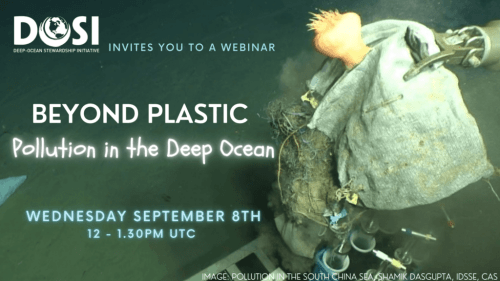
Plastic often grabs the headlines and its pervasiveness in the natural environment, including the deep ocean, is both highly visible and alarming. But plastic is far from being the only anthropogenic pollutant impacting the most pristine and inaccessible parts of the ocean. In this webinar, experts will address the different types of pollutants impacting open and deep-ocean marine life, how they reach the deepest parts of the ocean and what is being done to galvanise global communities to clean up their act. There will also be case studies presented from around the world demonstrating how pollution and debris in the deep ocean has tangible impacts on local communities. Details of speakers can be found below.
Speakers:

Inês Martins works at the Okeanos-Azores University, R&D Institute on Marine Sciences in Portugal. She dedicates her research to interdisciplinary studies in marine ecotoxicology and ecophysiology. Her main goal is to identify the molecular mechanism behind the regulation and detoxification of metal ions in deep-sea organisms. Presently she is working with cellular physiology in cold-water corals using proteomics, histology and gene expression as her main tools to identify oxidative stress biomarkers.
Topic: Impacts of acute copper concentrations on cold-water corals under an ocean acidification scenario
…
Continue reading ‘DOSI webinar series – Beyond plastic: pollution in the deep ocean’Coastal Management Journal – Ocean acidification: insight for policy and integrated management
Published 1 September 2021 Web sites and blogs ClosedTags: article, document/pdf, resource, webpage, website
Today the International Alliance to Combat Ocean Acidification, alongside several U.S. state partners released a special issue of Coastal Management Journal, “Ocean Acidification: Insight for Policy and Integrated Management,” published online by Taylor and Francis.
The special issue examines opportunities and challenges facing U.S. states in responding to ocean acidification (OA) and includes 42 authors representing government and non-government institutions across nine states.
Many of the authors are resource managers on the front lines of addressing OA, using a variety of strategies to assess information needs, develop data sets, build partnerships inside and outside state government and formulate approaches that link ocean change science to management at local and regional scales.
Impacts of climate change and increasing OA pose significant risk to states, communities and economies that enjoy and depend on thriving fisheries and shellfish production related to commercial, subsistence or cultural practices. Although the issue consolidates current and emerging U.S. state policy directives and practices, local and international actors may benefit from lessons learned and case studies presented—further advancing subnational and national efforts to address climate and ocean change.
“Lessons learned and partnerships forged at a state level have strengthened regional alignment and international vision for action,” said Dr. Caren Braby, Oregon Department of Fish and Wildlife on the special issue’s contributors.

The issue is comprised of four peer-reviewed articles and two essays, including:
- Opportunities for State Governments and In-Region Partners to Address Ocean Acidification Through Management and Policy Frameworks (Turner, et al.)
- Understanding and Advancing Natural Resource Management in the Context of Changing Ocean Conditions (Keil, et al.)
- Monitoring Ocean Acidification Within State Borders: Lessons Learned from Washington State (Gonski, et al.)
- Capacity Building to Address Ocean Change: Organizing Across Communities of Place, Practice and Governance to Achieve Ocean Acidification and Hypoxia Resilience in Oregon (Essay by Oregon Department of Fish and Wildlife.)
- Community Science for Coastal Acidification Monitoring and Research (Gassett, et al.)
- International and Domestic Leadership by U.S. States on Ocean Acidification (Essay by Ocean Conservancy.)
The Intergovernmental Panel on Climate Change (IPCC) Special Report on Ocean and Cryosphere in Changing Climate (IPCC, 2019) has emphasized that climate change is already having major impacts on our ocean. The report warns that ocean acidification is “virtually certain” to continue to be exacerbated by carbon emissions, with a high emissions path posing the most significant risks for severe and large changes. The Paris Agreement brought into force by the United Nations Framework Convention on Climate Change (UNFCCC) provides a framework for 195 nations to reduce greenhouse gas emissions.
It is against this backdrop that subnational governments, including U.S. states, are sharing information and responding to climate and ocean change by setting ambitious goals and targets of their own to mitigate, adapt and build resiliency.
“State have the advantage of being able to act quickly, innovate and experiment with programs, investments and pilot projects. They are typically the primary regulator—or strong influencer—in implementing most ocean-based climate solutions and responses,” said Whitney Berry, Senior Manager of Climate Policy, Ocean Conservancy.
For more information, contact Jessie Turner at Jturner@cascadiapolicy.com
Continue reading ‘Coastal Management Journal – Ocean acidification: insight for policy and integrated management’For copepods, there is no free lunch when coping with climate change
Published 1 September 2021 Press releases ClosedChallenges for this small marine animal have ripple effects through the whole food web and beyond.
The world’s oceans are becoming increasingly stressful places for marine life, and experts are working to understand what this means for the future. From rising temperatures; to acidification as more carbon enters the waters; to changes in the currents; the challenges are multifaceted, making experiments and projections difficult.
Copepods are small marine animals that are abundant, widely dispersed, and serve as major structural components of the ocean’s food web. A team of scientists from the University of Connecticut, Jinan University in China, and the University of Vermont have found that a species of copepod called Acartia tonsa can cope with climate change, but at a price. Their research was published today in Nature Climate Change.
“We have this problem of climate change and in the ocean, it is a multi-dimensional problem because it’s not just the warming, the ocean is becoming more acidic where pH is going down as we pump more CO2, into the atmosphere. Organisms need to cope, they are under more stress, and things are happening very fast,” says Hans Dam, UConn professor of marine sciences.
Dam explains that previous studies suggest some animals will be more sensitive than others to changes like shifts in pH. Prior studies with copepods showed they are not particularly sensitive to pH changes, but Dam points out those studies were only done with a single generation, or few generations, to a single stressor and shows the ability to acclimate rather than adapt. This new study not only looks at adaptation across 25 generations, it also considered both ocean warming and acidification (OWA), something that few studies have done until now.
Continue reading ‘For copepods, there is no free lunch when coping with climate change’Rapid, but limited, zooplankton adaptation to simultaneous warming and acidification
Published 1 September 2021 Science ClosedTags: biological response, crustaceans, laboratory, methods, molecular biology, morphology, mortality, multiple factors, North Atlantic, reproduction, temperature
Predicting the response of marine animals to climate change is hampered by a lack of multigenerational studies on evolutionary adaptation, particularly to combined ocean warming and acidification (OWA). We provide evidence for rapid adaptation to OWA in the foundational copepod species, Acartia tonsa, by assessing changes in population fitness on the basis of a comprehensive suite of life-history traits, using an orthogonal experimental design of nominal temperature (18 °C, 22 °C) and pCO2pCO2 (400, 2,000 µatm) for 25 generations (~1 year). Egg production and hatching success initially decreased under OWA, resulting in a 56% reduction in fitness. However, both traits recovered by the third generation, and average fitness was reduced thereafter by only 9%. Antagonistic interactions between warming and acidification in later generations decreased survival, thereby limiting full fitness recovery. Our results suggest that such interactions constrain evolutionary rescue and add complexity to predictions of the responses of animal populations to climate change.
Continue reading ‘Rapid, but limited, zooplankton adaptation to simultaneous warming and acidification’Simulated variation characteristics of oceanic CO2 uptake, surface temperature, and acidification in Zhejiang Province, China
Published 1 September 2021 Science ClosedTags: chemistry, field, modeling, North Pacific, regionalmodeling
Since preindustrial times, atmospheric CO2 content increased continuously, leading to global warming through the greenhouse effect. Oceanic carbon sequestration mitigates global warming; on the other hand, oceanic CO2 uptake would reduce seawater pH, which is termed ocean acidification. We perform Earth system model simulations to assess oceanic CO2 uptake, surface temperature, and acidification for Zhejiang offshore, one of the most vulnerable areas to marine disasters. In the last 40 years, atmospheric CO2 concentration increased by 71 ppm, and sea surface temperature (SST) in Zhejiang offshore increased at a rate of 0.16°C/10a. Cumulative oceanic CO2 uptake in Zhejiang offshore is 0.3 Pg C, resulting in an increase of 20% in sea surface hydrogen ion concentration, and the acidification rate becomes faster in the last decade. During 2020–2040, under four RCP scenarios, SST in Zhejiang offshore increases by 0.3–0.5°C, whereas cumulative ocean carbon sequestration is 0.150–0.165 Pg C. Relative to RCP2.6, the decrease of surface pH in Zhejiang offshore is doubled under RCP8.5. Furthermore, simulated results show that the relationship between CO2 scenario and oceanic carbon cycle is nonlinear, which hints that deeper reduction of anthropogenic CO2 emission may be needed if we aim to mitigate ocean acidification in Zhejiang offshore under a higher CO2 concentration scenario. Our study quantifies the variation characteristics of oceanic climate and carbon cycle fields in Zhejiang offshore, and provides new insight into the responses of oceanic carbon cycle and the climate system to oceanic carbon sequestration.
Continue reading ‘Simulated variation characteristics of oceanic CO2 uptake, surface temperature, and acidification in Zhejiang Province, China’Effects of ocean acidification, hypoxia, and warming on the gut microbiota of the thick shell mussel Mytilus coruscus through 16S rRNA gene sequencing
Published 1 September 2021 Science ClosedTags: biological response, BRcommunity, laboratory, molecular biology, mollusks, multiple factors, physiology, prokaryotes, temperature
Gut microbiota play a very important role in the health of the host, such as protecting from pathogens and maintaining homeostasis. However, environmental stressors, such as ocean acidification, hypoxia, and warming can affect microbial communities by causing alteration in their structure and relative abundance and by destroying their network. The study aimed to evaluate the combined effects of low pH, low dissolved oxygen (DO) levels, and warming on gut microbiota of the mussel Mytilus coruscus. Mussels were exposed to two pH levels (8.1, 7.7), two DO levels (6, 2 mg L−1), and two temperature levels (20, 30°C) for a total of eight treatments for 30 days. The experiment results showed that ocean acidification, hypoxia, and warming affected the community structure, species richness, and diversity of gut microbiota. The most abundant phyla noted were Proteobacteria, Bacteroidetes, and Firmicutes. Principal coordinate analysis (PCoA) revealed that ocean acidification, hypoxia, and warming change microbial community structure. Low pH, low DO, and increased temperature can cause shifting of microbial communities toward pathogen dominated microbial communities. Linear discriminant analysis effect size (LEfSe) showed that the significantly enriched biomarkers in each group are significantly different at the genus level. Phylogenetic investigation of communities by reconstruction of unobserved states (PICRUSt) analysis revealed that the gut microbiome of the mussels is associated with many important functions, such as amino acid transport and metabolism, transcription, energy production and conservation, cell wall, membrane and envelope biogenesis, and other functions. This study highlights the complexity of interaction among pH, DO, and temperature in marine organisms and their effects on the gut microbiota and health of marine mussels.
Continue reading ‘Effects of ocean acidification, hypoxia, and warming on the gut microbiota of the thick shell mussel Mytilus coruscus through 16S rRNA gene sequencing’The marine gastropod Crepidula fornicata remains resilient to ocean acidification across two life history stages
Published 1 September 2021 Science ClosedTags: adaptation, biological response, laboratory, molecular biology, mollusks, morphology, North Pacific, otherprocess
Rising atmospheric CO2 reduces seawater pH causing ocean acidification (OA). Understanding how resilient marine organisms respond to OA may help predict how community dynamics will shift as CO2 continues rising. The common slipper shell snail Crepidula fornicata is a marine gastropod native to eastern North America that has been a successful invader along the western European coastline and elsewhere. It has also been previously shown to be resilient to global change stressors. To examine the mechanisms underlying C. fornicata’s resilience to OA, we conducted two controlled laboratory experiments. First, we examined several phenotypes and genome-wide gene expression of C. fornicata in response to pH treatments (7.5, 7.6, and 8.0) throughout the larval stage and then tested how conditions experienced as larvae influenced juvenile stages (i.e., carry-over effects). Second, we examined genome-wide gene expression patterns of C. fornicata larvae in response to acute (4, 10, 24, and 48 h) pH treatment (7.5 and 8.0). Both C. fornicata larvae and juveniles exhibited resilience to OA and their gene expression responses highlight the role of transcriptome plasticity in this resilience. Larvae did not exhibit reduced growth under OA until they were at least 8 days old. These phenotypic effects were preceded by broad transcriptomic changes, which likely served as an acclimation mechanism for combating reduced pH conditions frequently experienced in littoral zones. Larvae reared in reduced pH conditions also took longer to become competent to metamorphose. In addition, while juvenile sizes at metamorphosis reflected larval rearing pH conditions, no carry-over effects on juvenile growth rates were observed. Transcriptomic analyses suggest increased metabolism under OA, which may indicate compensation in reduced pH environments. Transcriptomic analyses through time suggest that these energetic burdens experienced under OA eventually dissipate, allowing C. fornicata to reduce metabolic demands and acclimate to reduced pH. Carry-over effects from larval OA conditions were observed in juveniles; however, these effects were larger for more severe OA conditions and larvae reared in those conditions also demonstrated less transcriptome elasticity. This study highlights the importance of assessing the effects of OA across life history stages and demonstrates how transcriptomic plasticity may allow highly resilient organisms, like C. fornicata, to acclimate to reduced pH environments.
Continue reading ‘The marine gastropod Crepidula fornicata remains resilient to ocean acidification across two life history stages’Environmental vulnerability of the global ocean epipelagic plankton community interactome
Published 1 September 2021 Science ClosedTags: Arctic, biological response, chemistry, communitymodeling, globalmodeling, modeling, phytoplankton
Marine plankton form complex communities of interacting organisms at the base of the food web, which sustain oceanic biogeochemical cycles and help regulate climate. Although global surveys are starting to reveal ecological drivers underlying planktonic community structure and predicted climate change responses, it is unclear how community-scale species interactions will be affected by climate change. Here, we leveraged Tara Oceans sampling to infer a global ocean cross-domain plankton co-occurrence network—the community interactome—and used niche modeling to assess its vulnerabilities to environmental change. Globally, this revealed a plankton interactome self-organized latitudinally into marine biomes (Trades, Westerlies, Polar) and more connected poleward. Integrated niche modeling revealed biome-specific community interactome responses to environmental change and forecasted the most affected lineages for each community. These results provide baseline approaches to assess community structure and organismal interactions under climate scenarios while identifying plausible plankton bioindicators for ocean monitoring of climate change.
Continue reading ‘Environmental vulnerability of the global ocean epipelagic plankton community interactome’Ocean acidification Senior Scientist (natural resource scientist 4)
Published 1 September 2021 Jobs ClosedSalary: $65,592.00 – $86,064.00 Annually
Location: Thurston County – Lacey, WA
Job Type: Full Time – Permanent
Department: Dept. of Ecology
Job Number: 2019-EAP4603-08878
Closing: Continuous
Description:
Protecting Washington State’s environment for current and future generations is what we do every day at Ecology. We are a culture that is invested in making a difference. If you want to join a team that is highly effective, collaborative, has leadership that embraces the value of people, and believes in the fun factor, Ecology is a good fit.
The Environmental Assessment Program (EAP) within the Department of Ecology is looking to fill an Ocean Acidification Senior Scientist(Natural Resource Scientist 4) position. This position will be located at our Headquarters Building in Lacey, WA.
The Ocean Acidification Senior Scientist position serves as the designated technical expert in the agency on ocean acidification science.
We are seeking applicants who have excellent attention to technical details, possess the ability to work independently and take initiative, are flexible, team-oriented, and have the ability to communicate and work effectively with a diverse audience.
As an agency, our mission is to protect, preserve and enhance Washington’s environment for current and future generations. We invest in our employees to create and sustain a working environment that encourages creative leadership, effective resource management, teamwork, professionalism and accountability.
…
Duties:
The Environmental Assessment Program is the science branch of Ecology. We provide a range of scientific, monitoring, laboratory, and quality assurance services to support important natural resource management decisions in Washington.
The Ocean Acidification Senior Scientist position is designated by the director as the senior scientist in the agency on ocean acidification science. Some of the key work activities include:
Continue reading ‘Ocean acidification Senior Scientist (natural resource scientist 4)’Carbon emissions could change 95 per cent of surface ocean climates by 2100, threatening ecosystems: study
Published 31 August 2021 Press releases ClosedWhen it comes to protecting the ocean’s ecosystems, a new study says that we’re at a critical juncture point.
Up to 95 per cent of climates within the surface ocean that exist today may disappear within the next 80 years if we don’t do more to curb greenhouse gas emissions, potentially having a devastating impact on ecosystems and widespread extinction, researchers say.
Researchers from Northeastern University in Massachusetts published the study last Thursday in the journal Scientific Reports. Using atmospheric carbon dioxide data, they modelled what would happen to the ocean’s climates by the year 2100 under two potential climate scenarios.
…
In the first scenario — called RCP 4.5 — global emissions would peak in 2050 before decline. The UN Intergovernmental Panel on Climate Change calls this the intermediate scenario. Under RCP 4.5, the study says that 35.6 per cent of the surface ocean climates could experience “an extreme degree of global disappearance” by 2100.
But under RCP 8.5, otherwise known as the “worst case” or “business as usual” scenario, that estimate jumps to 95 per cent.
“If the projections of climate novelty and disappearance reported here are accurate, the cascading effects on marine ecosystems and communities could be substantial,” the authors warn.
HOW CLIMATE CHANGE CAN AFFECT MARINE LIFE
It’s more than just warmer temperatures that are threatening ocean ecosystems.
Surface ocean refers to the upper layer of the ocean that’s approximately 330 feet deep. It’s the part that interacts with the air the most and can absorb atmospheric carbon dioxide.
But more CO2 in the atmosphere as a result of emissions leads to more CO2 in the oceans, which can increase the acidity of the water.
“(Increased CO2 levels) basically upsets the balance of ions,” said Lotterhos. “The CO2 molecules interact with the water molecules, and that results in an increase in hydrogen ions. That’s what makes the water more acidic.”
For certain marine species, such as oysters, snails and corals, lower pH levels can disrupt their ability to extract calcium from the sea water. These species rely on sea water calcium to form their shells.
“Under ocean acidification, it becomes harder for them to get that calcium from the seawater to make their skeletons. And once the water becomes acidic enough, it can actually dissolve the shells or skeletons,” Lotterhos said.
…
Continue reading ‘Carbon emissions could change 95 per cent of surface ocean climates by 2100, threatening ecosystems: study’Novel and disappearing climates in the global surface ocean from 1800 to 2100
Published 31 August 2021 Science ClosedTags: chemistry, mitigation
Marine ecosystems are experiencing unprecedented warming and acidification caused by anthropogenic carbon dioxide. For the global sea surface, we quantified the degree that present climates are disappearing and novel climates (without recent analogs) are emerging, spanning from 1800 through different emission scenarios to 2100. We quantified the sea surface environment based on model estimates of carbonate chemistry and temperature. Between 1800 and 2000, no gridpoints on the ocean surface were estimated to have experienced an extreme degree of global disappearance or novelty. In other words, the majority of environmental shifts since 1800 were not novel, which is consistent with evidence that marine species have been able to track shifting environments via dispersal. However, between 2000 and 2100 under Representative Concentrations Pathway (RCP) 4.5 and 8.5 projections, 10–82% of the surface ocean is estimated to experience an extreme degree of global novelty. Additionally, 35–95% of the surface ocean is estimated to experience an extreme degree of global disappearance. These upward estimates of climate novelty and disappearance are larger than those predicted for terrestrial systems. Without mitigation, many species will face rapidly disappearing or novel climates that cannot be outpaced by dispersal and may require evolutionary adaptation to keep pace.
Continue reading ‘Novel and disappearing climates in the global surface ocean from 1800 to 2100’Experimental reef communities persist under future ocean acidification and warming
Published 31 August 2021 Science ClosedTags: abundance, biological response, BRcommunity, calcification, community composition, corals, laboratory, mesocosms, molecular biology, mortality, multiple factors, North Pacific, otherprocess, performance, physiology, protists, temperature
Coral reefs are among the most sensitive ecosystems affected by ocean acidification and warming, and are predicted to shift from net accreting calcifier-dominated systems to net eroding algal-dominated systems over the coming decades. Here we present a long-term experimental study examining the responses of entire mesocosm coral reef communities to acidification (-0.2 pH units), warming (+ 2°C), and combined future ocean (-0.2 pH, + 2°C) treatments. We show that under future ocean conditions, net calcification rates declined yet remained positive, corals showed reduced abundance yet were not extirpated, and community composition shifted while species richness was maintained. Our results suggest that under Paris Climate Agreement targets, coral reefs could persist in an altered functional state rather than collapse.
Continue reading ‘Experimental reef communities persist under future ocean acidification and warming’Rate and fate of dissolved organic carbon release by seaweeds: a missing link in the coastal ocean carbon cycle
Published 31 August 2021 Science ClosedTags: algae, biogeochemistry, biological response, physiology
Dissolved organic carbon (DOC) release by seaweeds (marine macroalgae) is a critical component of the coastal ocean biogeochemical carbon cycle but is an aspect of seaweed carbon physiology that we know relatively little about. Seaweed-derived DOC is found throughout coastal ecosystems and supports multiple food web linkages. Here, we discuss the mechanisms of DOC release by seaweeds and group them into passive (leakage, requires no energy) and active release (exudation, requires energy) with particular focus on the photosynthetic “overflow” hypothesis. The release of DOC from seaweeds was first studied in the 1960s, but subsequent studies use a range of units hindering evaluation: we convert published values to a common unit (μmol C · g DW−1 · h−1) allowing comparisons between seaweed phyla, functional groups, biogeographic region, and an assessment of the environmental regulation of DOC production. The range of DOC release rates by seaweeds from each phylum under ambient environmental conditions was 0–266.44 μmol C · g DW−1 · h−1 (Chlorophyta), 0–89.92 μmol C · g DW−1 · h−1 (Ochrophyta), and 0–41.28 μmol C · g DW−1· h−1 (Rhodophyta). DOC release rates increased under environmental factors such as desiccation, high irradiance, non-optimal temperatures, altered salinity, and elevated dissolved carbon dioxide (CO2) concentrations. Importantly, DOC release was highest by seaweeds that were desiccated (<90 times greater DOC release compared to ambient). We discuss the impact of future ocean scenarios (ocean acidification, seawater warming, altered irradiance) on DOC release rates by seaweeds, the role of seaweed-derived DOC in carbon sequestration models, and how they inform future research directions.
Continue reading ‘Rate and fate of dissolved organic carbon release by seaweeds: a missing link in the coastal ocean carbon cycle’

