Posts Tagged 'Indian'


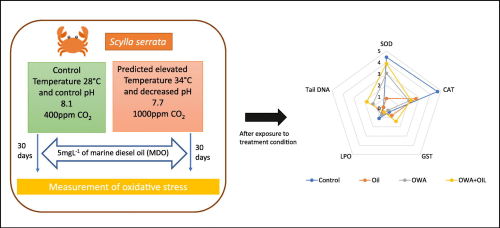
The influence of ocean acidification and warming on responses of Scylla serrata to oil pollution: an integrated biomarker approach

Graphical abstract

Highlights

  • The OAW conditions reduce tolerance capacity of crabs to acute pollution stress.
  • A greater degree of stress was experienced in oil exposure under OAW conditions.
  • Augmented antioxidant and detoxification enzyme activity was noted.

Abstract

Anthropogenic activities primarily combustion of fossil fuel is the prime cause behind the increased concentration of CO2 into the atmosphere. As a consequence, marine environments are anticipated to experience shift towards lower pH and elevated temperatures. Moreover, since the industrial revolution the growing demand for petroleum-based products has been mounting up worldwide leading to severe oil pollution. Sundarbans estuarine system (SES) is experiencing ocean warming, acidification as well as oil pollution from the last couple of decades. Scylla serrata is one of the most commercially significant species for aquaculture in coastal areas of Sundarbans. Thus, the prime objective of this study is to delineate whether exposure under ocean warming and acidification exacerbates effect of oil spill on oxidative stress of an estuarine crab S. serrata. Animals were separately exposed under current and projected climate change scenario for 30 days. After this half animals of each treatment were exposed to oil spill conditions for 24 h. Oxidative stress status superoxide dismutase (SOD), catalase (CAT), glutathione S-transferase (GST), lipid peroxidation (LPO level) and DNA damage (Comet assay) were measured. Augmented antioxidant and detoxification enzyme activity was noted except for SOD but failed to counteract LPO and DNA damage. The present results clearly highlighted the detrimental combined effect of OWA and pollution on oxidative stress status of crabs that might potentially reduce its population and affect the coastal aquaculture in impending years.

Continue reading ‘The influence of ocean acidification and warming on responses of Scylla serrata to oil pollution: an integrated biomarker approach’

Effects of climate change on the Kenyan coral reef eco-system

The coral reef ecosystem is a natural habitat for many marine organisms that has high economic and tourist significance. Nonetheless, this ecosystem has very low tolerance to the effects of changes brought about by increasing sea surface temperatures and ocean acidification. This study sought to investigate the combined effect of rising sea surface temperatures and ocean acidification on the Kenyan coral reef ecosystem. This was achieved by determining the spatial-temporal variability of ocean acidification over the Kenyan coastline; and simulating the combined effect of sea surface temperature increases and ocean acidification on the coral reef ecosystem.

Historical (2000-2021) data on sea surface temperature (SSTs) was obtained from the National Oceanic and Atmospheric Administration (NOAA) and data on dissolved total carbon dioxide (TCO2) and pH from Global Ocean Data Analysis Project (GLODAP). Future (2022-2081) sea surface temperature and dissolved carbon dioxide data was downloaded from Coupled Model Intercomparison Project (CMIP6) experiment for two Shared Socioeconomic Pathways (SSPs) namely SSP2-4.5 and SSP5-8.5. Statistical, graphical and model simulations analyses were applied in the study to investigate the combined effect of increasing SST and ocean acidification on coral reef ecosystem over the Kenyan coastline.

Results indicate that mean sea surface temperature and dissolved carbon dioxide along the Kenyan coastline varied with seasons and had increased between the years 2000-2021. Trend tests of SSTs and TCO2 revealed a significant upward trend at 5% level of significance. Rising SSTs led to bleaching in coral reefs along this coastline whereas TCO2 led to reduced amount of carbonate ion concentration and reduced pH in the sea surface waters which affected the rates of calcification and survival of the coral reefs. The results of the Combined Mortality and Bleaching Output model simulation revealed that bleaching and ocean acidification had negatively affected the coral reef cover resulting in a decline of more than 30% of cover between 2000 and 2021. The results of the simulation also projected that the coral reef cover will continue to decline in the long-term by 52% under SSP2-4.5 and 63% under SSP5-8.5 if the trends in SSTs and TCO2 are maintained.

This study recommends collaborative implementation of climate change policies and practices by national and regional governments, communities and policy makers; enhanced efforts by coastal county governments in Kenya and research organisations to expound on scientific knowledge base while simultaneously implementing sustainable targeted solutions to ensure that the socio-economic benefits of the coral reef ecosystem are sustained.

Continue reading ‘Effects of climate change on the Kenyan coral reef eco-system’

Malformation in coccolithophores in low pH waters: evidences from the eastern Arabian Sea

Oceanic calcifying plankton such as coccolithophores is expected to exhibit sensitivity to climate change stressors such as warming and acidification. Observational studies on coccolithophore communities along with carbonate chemistry provide important perceptions of possible adaptations of these organisms to ocean acidification. However, this phytoplankton group remains one of the least studied in the northern Indian Ocean. In 2017, the biogeochemistry group at the Council for Scientific and Industrial Research-National Institute of Oceanography (CSIR-NIO) initiated a coccolithophore monitoring study in the eastern Arabian Sea (EAS). Here, we document for the first time a detailed spatial and seasonal distribution of coccolithophores and their controlling factors from the EAS, which is a well-known source of CO2 to the atmosphere. To infer the seasonality, data collected at three transects (Goa, Mangalore, and Kochi) during the Southwest Monsoon (SWM) of 2018 was compared with that of the late SWM of 2017. Apart from this, the abundance of coccolithophores was studied at the Candolim Time Series (CaTS) transect, off Goa during the Northeast Monsoon (NEM). The most abundant coccolithophore species found in the study region was Gephyrocapsa oceanica. A high abundance of G. oceanica (1800 × 103cells L−1) was observed at the Mangalore transect during the late SWM despite experiencing low pH and can be linked to nitrogen availability. The high abundance of G. oceanica at Mangalore was associated with high dimethylsulphide (DMS). Particulate inorganic carbon (PIC) and scattering coefficient retrieved from satellites also indicated a high abundance of coccolithophores off Mangalore during the late SWM of 2017. Interestingly, G. oceanica showed malformation during the late SWM in low pH waters. Malformation in coccolithophores could have a far-reaching impact on the settling fluxes of organic matter and also on the emissions of climatically important gases such as DMS and CO2, thus influencing atmospheric chemistry. The satellite data for PIC in the EAS indicates a high abundance of coccolithophore in recent years, especially during the warm El Nino years (2015 and 2018). This warrants the need for a better assessment of the fate of coccolithophores in high-CO2 and warmer oceans.

Continue reading ‘Malformation in coccolithophores in low pH waters: evidences from the eastern Arabian Sea’

Spatial and temporal variability of the sources and sinks of carbonate system in the southwest bay of Bengal from 2014 to 2020

Highlights

  • We examine the association between all carbonate variables with physcio-chemical and biological factors to better understand seasonal fluctuations.
  • Seasonal and inter-annual source and sink of air-sea CO2 flux was observed from 2014 to 2020.
  • Seasonal correlations coefficient was analysed between nutrients and carbonate systems.

Abstract

This study presents a synthesis of surface water partial pressure of CO2 (pCO2) and nutrient measurement in the southwest Bay of Bengal (swBoB) from 2014 to 2020 and characterizes the spatial and temporal variability. pCO2 rates found to be high (1191μatm) during the 2015 monsoon and low (176 μatm) in the summer season during the month of May 2015. The inter-annual CO2 fluxes varied from −4.79 to 9.97 mmol Cm−2d−1. The significant a negative CO2 flux (−4.79 mmol Cm−2d−1) was recorded during the summer season in the year 2019, whereas a positive significant CO2 flux (9.97 mmol Cm−2d−1) was observed during the monsoon in 2014. Major physical parameters are at their highest during summer owing to increased high solar radiation during cloud-free circumstances, reduced or inadequate riverine flux, and a lack of vertical mixing of the water column, which results in the lowest nutrients concentration, Dissolved Oxygen (DO), Dissolved Inorganic Nitrogen (DIN), Dissolved Organic Carbon (DOC), chlorophyll-a, Particulate Organic Carbon (POC), pCO2, that leads to negative CO2 flux to the atmosphere. In contrast during monsoon season colossal discharge of freshwater high DO, DIN, DOC, chlorophyll-a, POC, pCO2 as results source CO2 flux to the atmosphere. Statistical analysis the correlation coefficient depicts Total Alkalinity (TA), DIC, POC, DIN, and DO found a positive correlation with pCO2 and fCO2 during the monsoon season. In the swBoB, pCO2 had a negative relationship with sea surface temperature (SST), sea surface salinity (SSS), and pH because CO2 solubility changes with SST and increases in cold water rather than warm water. In this study, we examine the association between all carbonate variables and the SSS and SST to better understand seasonal fluctuations.

Continue reading ‘Spatial and temporal variability of the sources and sinks of carbonate system in the southwest bay of Bengal from 2014 to 2020’

Understanding the seasonality, trends, and controlling factors of Indian Ocean acidification over distinctive bio-provinces

The Indian Ocean (IO) is witnessing acidification as a direct consequence of the continuous rising of atmospheric CO2 concentration and indirectly due to rapid ocean warming, which disrupts the pH of the surface waters. This study investigates the pH seasonality and trends over various bio-provinces of the IO and regionally assesses the contribution of each of its controlling factors. Simulations from a global and a regional ocean model coupled with biogeochemical modules were validated with pH measurements over the basin and used to discern the regional response of pH seasonality (1990–2010) and trend (1961–2010) to changes in Sea Surface Temperature (SST), Dissolved Inorganic Carbon (DIC), Total Alkalinity (ALK), and Salinity (S). DIC and SST are significant contributors to the seasonal variability of pH in almost all bio-provinces. Total acidification in the IO basin was 0.0675 units from 1961 to 2010, with 69.3% contribution from DIC followed by 13.8% contribution from SST. For most of the bio-provinces, DIC remains a dominant contributor to changing trends in pH except for the Northern Bay of Bengal and Around India (NBoB-AI) region, wherein the pH trend is dominated by ALK (55.6%) and SST (16.8%). Interdependence of SST and S over ALK is significant in modifying the carbonate chemistry and biogeochemical dynamics of NBoB-AI and a part of tropical, subtropical IO bio-provinces. A strong correlation between SST and pH trends infers an increasing risk of acidification in the bio-provinces with rising SST and points out the need for sustained monitoring of IO pH in such hotspots.

Continue reading ‘Understanding the seasonality, trends, and controlling factors of Indian Ocean acidification over distinctive bio-provinces’

A study of hypoxia and ocean acidification related physico-chemical parameters in selected coastal waters around Mauritius

Sea water samples were collected at five stations around Mauritius namely Flic-en-Flac, Albion, Mont Choisy, Trou-d’Eau-Douce and La Cambuse over 12 months from July 2021 to June 2022 for the analysis of dissolved oxygen (D.O), pHT and Total alkalinity (AT). Albion was the only open water system whereas the others were lagoons. Summer was from November 2021 to April 2022 while the period from July 2021 to October 2021, May 2022 and June 2022 were considered to be winter. The summer mean values of sea surface temperature (SST), D.O, pHT and AT varied from 28.2 ± 1.3 °C to 29.8 ± 2.2 °C, from 6.60 ± 1.15 mgL−1 to 8.11 ± 0.51 mgL−1, from 8.10 ± 0.09 to 8.20 ± 0.12 and from 2324.5 ± 110.6 μmol kg−1 to 2384.8 ± 118.6 μ mol kg−1, respectively. The winter mean values of these parameters varied from 24.7 ± 1.1 °C to 26.1 ± 1.4 °C, from 6.55 ± 1.21 mgL−1 to 8.26 ± 0.67 mgL−1, from 8.00 ± 0.08 to 8.13 ± 0.14 and from 2397.2 ± 84.9 μmol kg−1 to 2448.7 ± 108.5 μmol kg−1, respectively. The Two-way measures ANOVA and the post hoc analysis revealed that (1) the only two stations having a comparable mean pHT variability in the two seasons were Albion and La Cambuse, despite having opposite bearings and morphology, but their mean D.O variability was the contrary (2) the mean temporal variability in D.O and pHT at Mont Choisy were not significant due to the presence of sea grasses.

Continue reading ‘A study of hypoxia and ocean acidification related physico-chemical parameters in selected coastal waters around Mauritius’

No effect of ocean acidification on growth, photosynthesis, or dissolved organic carbon release by three temperate seaweeds with different dissolved inorganic carbon uptake strategies

In a future ocean, dissolved organic carbon (DOC) release by seaweed has been considered a pathway for organic carbon that is not incorporated into growth under carbon dioxide (CO2) enrichment/ocean acidification (OA). To understand the influence of OA on seaweed DOC release, a 21-day experiment compared the physiological responses of three seaweed species, two which operate CO2 concentrating mechanisms (CCMs), Ecklonia radiata (C. Agardh) J. Agardh and Lenormandia marginata (Hooker F. and Harvey) and one that only uses CO2 (non-CCM), Plocamium cirrhosum (Turner) M.J. Wynne. These two groups (CCM and non-CCM) are predicted to respond differently to OA dependent on their affinities for Ci (defined as CO2 + bicarbonate, HCO3). Future ocean CO2 treatment did not drive changes to seaweed physiology—growth, Ci uptake, DOC production, photosynthesis, respiration, pigments, % tissue carbon, nitrogen, and C:N ratios—for any species, regardless of Ci uptake method. Our results further showed that Ci uptake method did not influence DOC release rates under OA. Our results show no benefit of elevated CO2 concentrations on the physiologies of the three species under OA and suggest that in a future ocean, photosynthetic CO2 fixation rates of these seaweeds will not increase with Ci concentration.

Continue reading ‘No effect of ocean acidification on growth, photosynthesis, or dissolved organic carbon release by three temperate seaweeds with different dissolved inorganic carbon uptake strategies’

Report on ocean acidification monitoring in the Western Indian Ocean

Carbon dioxide (CO2) emissions from human activities are largely absorbed by the ocean, accounting for about one-third of the total emissions over the past 200 years from the combustion of fossil fuels, the production of cement, and changes in land use (Sabine et al., 2004). The uptake of CO2 by the ocean benefits society by moderating the rate of climate change but also causes unprecedented changes to ocean chemistry, decreasing the pH of the water and leading to a suite of chemical changes collectively known as ocean acidification. Like climate change, ocean acidification is a growing global problem that will intensify with continued CO2 emissions and has the potential to change marine ecosystems and affect benefits to society.

The chemistry of the ocean is changing at an unprecedented rate and magnitude due to anthropogenic carbon dioxide emissions; the rate of change exceeds that which has occurred for at least the past hundreds of thousands of years. Unless anthropogenic CO2 emissions are substantially curbed, or atmospheric CO2 is controlled by some other means, the average pH of the ocean will continue to fall. Ocean acidification has demonstrated impacts on many marine organisms. While the ultimate consequences are still unknown, there is a risk of ecosystem change that may threaten coral reefs, fisheries, protected species, and other natural resources of value to society.

Since the start of the Industrial Revolution, the average pH of ocean surface waters has decreased by about 0.1 units, from about 8.2 to 8.1. Model predictions show an additional 0.2–0.3 drop in pH by the end of the century, even under optimistic scenarios. Perhaps more important is that the rate of this change exceeds any known change in ocean chemistry for at least 800,000 years. The major changes in ocean chemistry caused by increasing atmospheric CO2 are well understood and can be precisely calculated, despite some uncertainty resulting from biological feedback processes.

However, the direct biological effects of ocean acidification are less certain and will vary among organisms, with some coping well and others not at all. The long-term consequences of ocean acidification for marine biota are unknown, but changes in many ecosystems and the services they provide to society appear likely based on current understanding.

In response to these concerns, WIOMSA launched ocean acidification projects in six countries: Kenya, Mauritius, Mozambique, Seychelles, South Africa and Tanzania, with the support of the Swedish International Development Cooperation Agency and institutional partners in the WIO region. The research provides a baseline that will foster the development of an integrated science strategy for ocean acidification monitoring, research and impact assessment. It presents a review of the current state of knowledge on ocean acidification in the WIO region and identifies the gaps in information required to improve understanding and address the consequences of ocean acidification.

The report consists of seven chapters. Chapter 1 introduces the subject of ocean acidification and chapters 2 to 7 summarize the esults of ocean acidification monitoring in the six countries that participated in the four-year monitoring project. Lessons learned and recommendations are presented for each country.

Continue reading ‘Report on ocean acidification monitoring in the Western Indian Ocean’

Spatial variability in aerosol composition and its seawater acidification potential in coastal waters of the western coastal Bay of Bengal

Deposition of atmospheric dust is reported to acidify surface waters in the northern Bay of Bengal (BoB). To examine the spatial variability in content and composition of total suspended matter (TSP), aerosol samples were collected at four locations (Damra, Chilika, Vizag and Chennai) along the east coast of India in the marine atmospheric boundary layer (MABL) to evaluate its impact on pH of surface waters due to deposition on surface waters using microcosm experiments. The concentration of total suspended matter (TSP) and [SO42– + NO3] increased from southern (146 and 6.16 µg m–3, respectively) to northern coastal BoB (197 and 34.57 µg m–3, respectively) due to the influence of pollutants from Indo-Gangetic Plain (IGP) in the north and dominant marine sources in the southern coastal BoB. The ionic balance in aerosols suggested that acidification potential (neutralization potential) increased (decreased) from southern to northern BoB. The dissolution of aerosols in surface seawater lowered pH by 0.018 ± 0.002 to 0.135 ± 0.005 in the coastal BoB with a higher decrease in the north than south. Our study suggests that aerosol dissolution in seawater results in ocean acidification in proportion to acidic anions (e.g., SO42–, NO3). In addition, organic acids, such as carboxylic acids, aromatic (Benzoic acid) and hydroxy acids (Lactic and glycolic acids) also contribute significantly to ocean acidification and their contribution needs further evaluation.

Continue reading ‘Spatial variability in aerosol composition and its seawater acidification potential in coastal waters of the western coastal Bay of Bengal’

A baseline assessment of coastal pH variability in a temperate South African embayment: implications for biological ocean acidification research

Compared with the open ocean, knowledge of pH variability in coastal waters is rudimentary, especially in Africa. This is concerning as quantifying local pH conditions is critical when assessing the response of coastal species to future ocean acidification scenarios. The objective of this study was to capture some of the variability in pH at scales and sites relevant to coastal marine organisms in a South African temperate embayment (Algoa Bay, Indian Ocean). We used a sampling approach that captured spatial (at a resolution of ∼10 km), monthly and diel (24-hour) variability in pH and associated physical and biological parameters at offshore and shallow inshore sites in Algoa Bay. We found that pH and associated parameters (temperature, calculated pCO2, chlorophyll a) varied over space and time in Algoa Bay. The range in pH was 0.30 units at offshore sites and 0.46 at inshore sites, and the average pH was 8.10 (SD 0.06) and 8.10 (SD 0.13) at these sites, respectively, which is typical for coastal environments. Our results showed that both biological factors (at the offshore sites) and salinity (at the inshore sites) may influence temporal and spatial variability in pH. We also identified a shallow inshore site with high levels of macroalgal growth that had consistently higher average daytime pH levels (8.33 [SD 0.07]), which may serve as an ocean acidification refuge for coastal marine species. This is the first comprehensive pH-monitoring study to be implemented in a nearshore coastal area in Africa and provides recommendations for monitoring in other understudied regions.

Continue reading ‘A baseline assessment of coastal pH variability in a temperate South African embayment: implications for biological ocean acidification research’

Long-term variability of satellite derived total alkalinity in the southwest Bay of Bengal

Highlights

  • Computed TA data validated in BoB region.
  • Spatial and temporal variability in TA are mostly due to variability in SSS and SST.
  • TA in BoB region, seasonal and inter-annual pattern over past 17 years.

Abstract

The seasonal and inter-annual variability of Total Alkalinity (TA) concentration was studied in the Bay of Bengal from 2003 to 2019 by using MODIS-Aqua derived sea surface temperature (SST) and sea surface salinity (SSS) products. The satellite derived TA showed a positive relationship with in-situ TA with (R2 = 0.67, RMSE = ±27.53 μMol/kg, SEE = ±32.16 and uncertainty error = 2287μMol/kg). The seasonal SST, SSS and TA portray the clear seasonal pattern between the seasons without any rapid change increase or decrease in trend observed over the years. In contrast to other seasons, the spring inter-monsoon was observed to have a warm surface water temperature with high salinity and TA. Strong wind and excessive cloud cover during the summer monsoon result in the reduction of ocean surface heat, which favours sea surface cooling and shallow mixed layer depth, resulting in low SST, SSS, and TA compared to the spring inter-monsoon. During fall inter-monsoon, the reversal of East India coastal current directs warm water from north to south and the weak wind that prevails in this region enhances stratification. During winter, low-saline water compensates the static stability loss by thermal inversion from the sea surface resulting in surface cooling with coldest SST, low SSS and TA during this period.

Continue reading ‘Long-term variability of satellite derived total alkalinity in the southwest Bay of Bengal’

Reviews and syntheses: carbon biogeochemistry of Indian estuaries

The goal of this review is to provide a comprehensive overview of the magnitude and drivers of carbon cycling dynamics in the major estuaries of India. Data from a total of 32 estuaries along the Bay of Bengal (BB) and the Arabian Sea (AS) were compiled from the literature and re-analysed based on changes in season (wet vs. dry) and marine end-members (e.g., BB vs. AS). The estuaries are generally undersaturated in dissolved oxygen relative to the atmosphere and strongly influenced by local and regional precipitation patterns. Speciation of the dissolved inorganic carbon (DIC) pool is dominated by bicarbonate and primarily variability in DIC is controlled by a combination of carbonate weathering, the degree of precipitation, the length of the estuaries, in situ respiration, and mixing. Carbonate dissolution had the largest influence on DIC during the wet season, while respiration was the primary control of DIC variability in the estuaries connected with BB during the dry season. Interestingly, the influence of anaerobic metabolism on DIC is observed in the oxygenated mangrove dominated estuaries, which we hypothesize is driven by porewater exchange in intertidal sediments. Dissolved organic carbon (DOC) generally behaves non-conservatively in the studied estuaries. The DOC-particulate organic carbon (POC) inter-conversion and DOC mineralization are evident in the BB during the dry season and AS estuaries, respectively. The wet season δ13CPOC shows dominance of freshwater algae, C3 plant material, as well as marine organic matter in POC. However, anthropogenic inputs are evident in some estuaries in eastern India during the dry season. POC respiration was identified in the AS; however, a link between POC and CH4 is identified throughout both the regions. pCO2 is controlled principally by respiration with freshwater discharge only playing a marginal important role in the BB. The AS estuaries act as a CO2 source to the atmosphere; however, the BB estuaries vary between a source and sink. POC together with methanotrophy and dam abundance appear to control CH4 concentrations, and all of the studied estuaries act as a CH4 source to the atmosphere. Additionally, anthropogenic inputs and groundwater exchange also show potential influences in some cases. The Indian estuaries contribute 2.62 % and 1.09 % to the global riverine DIC and DOC exports to the ocean, respectively. The total CO2 and CH4 fluxes from Indian estuaries are estimated as ~9718 Gg yr-1 and 3.27 Gg yr-1, which contributes ~0.67 % and ~0.12 %, respectively, to global estimates of estuarine greenhouse gas emissions. While a qualitative idea on the major factors controlling the carbon biogeochemistry in India is presented through this work, a more thorough investigation including rate quantification of the above-mentioned mechanisms is essential for precise accounting of the C budget of Indian estuaries.

Continue reading ‘Reviews and syntheses: carbon biogeochemistry of Indian estuaries’

Effects of acidification on fish larval abundance at Teknaf coast, Bangladesh

The study aimed to investigate the effects of acidification on fish larvae abundance at the Teknaf coast. From January 8 to December 14, 2021, samples of fish larvae were collected at every month from the Teknaf coast. From the bottom to the surface, Bongo-Net with a 500 µm mesh size was being towed. A total of 1,120 larvae were gathered from the research area during the survey. In the study region, 93 larvae/1,000 m3 were found to be the mean density of all fish larvae. The hydrological parameters such as water temperature, pH, salinity, and total alkalinity were determined to find out the effects of these variables on the larvae abundance along the Teknaf coast. The average values of the parameters including water temperature, pH, salinity, and total alkalinity were found at 28.41°C, 8.36, 23.57 PSU, and 113.25 mg/l respectively. The ocean acidification factors including pCO2, HCO3-, CO32-, DIC, ΩAragonite, and ΩCalcite were also determined by using the “seacarb” package of R programming to find out the effects of these variables on the larvae abundance along the Teknaf coast. The average values of the factors including pCO2, HCO3-, CO32-, DIC, ΩAragonite, and ΩCalcite were found 128.72 µatm, 0.000751 mole/kg, 0.000138 mole/kg, 0.000892 mole/kg, 2.3544 and 3.7028 respectively. The results showed an insignificant relationship between pCO2 and fish larvae abundance throughout the Teknaf coast. However, there was a negative correlation between pCO2 and pH. The findings of this research indicate that OA affects fish larvae abundance at Teknaf coast. Regional fisheries management organizations will be better able to make decisions about the management of the extremely valuable fish larvae as a result of future population-level predictions of the impacts of ocean acidification.

Continue reading ‘Effects of acidification on fish larval abundance at Teknaf coast, Bangladesh’

Do global environmental drivers’ ocean acidification and warming exacerbate the effects of oil pollution on the physiological energetics of Scylla serrata?

Global climate change–induced ocean warming and acidification have complex reverberations on the physiological functioning of marine ectotherms. The Sundarbans estuarine system has been under threat for the past few decades due to natural and anthropogenic disturbances. In recent years, petroleum products’ transportation and their usage have increased manifold, which causes accidental oil spills. The mud crab (Scylla serrata) is one of the most commercially exploited species in the Sundarbans. The key objective of this study was to delineate whether rearing under global environmental drivers (ocean acidification and warming) exacerbates the effect of a local driver (oil pollution) on the physiological energetics of mud crab (Scylla serrata) from the Sundarbans estuarine system. Animals were reared separately for 30 days under (a) the current climatic scenario (pH 8.1, 28°C) and (b) the predicted climate change scenario (pH 7.7, 34°C). After rearing for 30 days, 50% of the animals from each treatment were exposed to 5 mg L−1 of marine diesel oil for the next 24 h. Physiological energetics (ingestion rate, absorption rate, respiration rate, excretion rate, and scope for growth), thermal performance, thermal critical maxima (CTmax), acclimation response ratio (ARR), Arrhenius activation energy (AAE), temperature coefficient (Q10), warming tolerance (WT), and thermal safety margin (TSM) were evaluated. Ingestion and absorption rates were significantly reduced, whereas respiration and ammonia excretion rates significantly increased in stressful treatments, resulting in a significantly lower scope for growth. A profound impact on thermal performance was also noticed, leading to a downward shift in CTmax value for stress-acclimated treatment. The present results clearly highlighted the detrimental combined effect of global climatic stressors and pollution on the physiological energetics of crabs that might potentially reduce their population and affect coastal aquaculture in forthcoming years.

Continue reading ‘Do global environmental drivers’ ocean acidification and warming exacerbate the effects of oil pollution on the physiological energetics of Scylla serrata?’

Biotic and paleoceanographic changes across the Late Cretaceous Oceanic Anoxic Event 2 in the southern high latitudes (IODP sites U1513 and U1516, SE Indian Ocean)

Abstract

Oceanic Anoxic Event 2, spanning the Cenomanian/Turonian boundary (93.9 Ma), was an episode of major perturbations in the global carbon cycle. To investigate the response of biota and the paleoceanographic conditions across this event, we present data from International Ocean Discovery Program sites U1513 and U1516 in the Mentelle Basin (offshore SW Australia; paleolatitude 59°–60°S in the mid-Cretaceous) that register the first complete records of OAE 2 at southern high latitudes. Calcareous nannofossils provide a reliable bio-chronostratigraphic framework. The distribution and abundance patterns of planktonic and benthic foraminifera, radiolaria, and calcispheres permit interpretation of the dynamics of the water mass stratification and provide support for the paleobathymetric reconstruction of the two sites, with Site U1513 located northwest of the Mentelle Basin depocenter and at a deeper depth than Site U1516. The lower OAE 2 interval is characterized by reduced water mass stratification with alternating episodes of enhanced surface water productivity and variations of the thickness of the mixed layer as indicated by the fluctuations in abundance of the intermediate dwelling planktonic foraminifera. The middle OAE 2 interval contains lithologies composed almost entirely of radiolaria reflecting extremely high marine productivity; the low CaCO3 content is consistent with marked shoaling of the Carbonate Compensation Depth and ocean acidification because of CaCO3 undersaturation. Conditions moderated after deposition of the silica-rich, CaCO3-poor rocks as reflected by the microfossil changes indicating a relatively stable water column although episodes of enhanced eutrophy did continue into the lower Turonian at Site U1516.

Key Points

  • Documentation of first complete record of the Late Cretaceous Oceanic Anoxic Event 2 (OAE 2) at southern high latitudes (60°S) in the Indian Ocean
  • Dynamics of the water mass stratification inferred from distribution patterns of foraminifera, radiolaria, calcispheres
  • OAE 2 is characterized by alternating episodes of enhanced surface water productivity and variations of the thickness of the mixed layer
Continue reading ‘Biotic and paleoceanographic changes across the Late Cretaceous Oceanic Anoxic Event 2 in the southern high latitudes (IODP sites U1513 and U1516, SE Indian Ocean)’

Variable pH and subsequent change in pCO2 modulates the biofilm formation, synthesis of extracellular polymeric substances, and survivability of a marine bacterium Bacillus stercoris GST-03

Biofilm-forming bacteria adhere to the substrates and engage in the nutrient cycling process. However, environmental conditions may interrupt the biofilm formation ability, which ultimately may affect various biogeochemical cycles. The present study reports the effect of varying pH and subsequent change in pCO2 on the survivability, biofilm formation, and synthesis of extracellular polymeric substances (EPS) of a biofilm-forming marine bacterium Bacillus stercoris GST-03 isolated from the Bhitarkanika mangrove ecosystem, Odisha, India. Understanding the pH-dependent alteration in EPS constituents, and associated functional groups of a marine bacterium will provide better insight into the adaptability of the bacteria in future ocean acidification scenarios. The strain was found to tolerate and form biofilm up to pH 4, with the maximum biofilm formation at pH 6. EPS yield and the synthesis of the key components of the EPS, including carbohydrate, protein, and lipid, were found maximum at pH 6. Changes in biofilm formation patterns and various topological parameters at varying pH/pCO2 conditions were observed. A cellular chaining pattern was observed at pH 4, and maximum biofilm formation was obtained at pH 6 with biomass of 5.28582 ± 0.5372 μm3/μm2 and thickness of 9.982 ± 1.5288 μm. Structural characterization of EPS showed changes in various functional groups of constituent macromolecules with varying pH. The amorphous nature of the EPS and the changes in linkages and associated functional groups (-R2CHOR, –CH3, and –CH2) with pH variation was confirmed. EPS showed a two-step degradation with a maximum weight loss of 59.147% and thermal stability up to 480 °C at pH 6. The present work efficiently demonstrates the role of EPS in providing structural and functional stability to the biofilm in varying pH conditions. The findings will provide a better understanding of the adaptability of marine bacteria in the future effect of ocean acidification.

Continue reading ‘Variable pH and subsequent change in pCO2 modulates the biofilm formation, synthesis of extracellular polymeric substances, and survivability of a marine bacterium Bacillus stercoris GST-03′

Phytoplankton community shift in response to experimental Cu addition at the elevated CO2 levels (Arabian Sea, winter monsoon)

Understanding phytoplankton community shifts under multiple stressors is becoming increasingly important. Among other combinations of stressors, the impact of trace metal toxicity on marine phytoplankton under the ocean acidification scenario is an important aspect to address. Such multiple stressor studies are rare from the Arabian Sea, one of the highest productive oceanic provinces within the North Indian Ocean. We studied the interactive impacts of copper (Cu) and CO2 enrichment on two natural phytoplankton communities from the eastern and central Arabian Sea. Low dissolved silicate (DSi < 2 µM) favoured smaller diatoms (e.g. Nitzschia sp.) and non-diatom (Phaeocystis). CO2 enrichment caused both positive (Nitzschia sp. and Phaeocystis sp.) and negative (Cylindrotheca closterium, Navicula sp., Pseudo-nitzschia sp., Alexandrium sp., and Gymnodinium sp.) growth impacts. The addition of Cu under the ambient CO2 level (A-CO2) hindered cell division in most of the species, whereas Chla contents were nearly unaffected. Interestingly, CO2 enrichment seemed to alleviate Cu toxicity in some species (Nitzschia sp., Cylindrotheca closterium, Guinardia flaccida, and Phaeocystis) and increased their growth rates. This could be related to the cellular Cu demand and energy budget at elevated CO2 levels. Dinoflagellates were more sensitive to Cu supply compared to diatoms and prymnesiophytes and could be related to the unavailability of prey. Such community shifts in response to the projected ocean acidification, oligotrophy, and Cu pollution may impact trophic transfer and carbon cycling in this region.

Continue reading ‘Phytoplankton community shift in response to experimental Cu addition at the elevated CO2 levels (Arabian Sea, winter monsoon)’

Modeling the sea-surface pCO2 of the central Bay of Bengal region using machine learning algorithms

Highlights

  • Performance of MLR, ANN, and XGboost for emulating sea-surface pCO2 is evaluated.
  • XGBoost outperforms MLR and ANN in reproducing sea-surface pCO2.
  • The pCO2 reproducibility using satellite-derived SST and SSS is best using XGBoost.
  • The central BoB has been warming at a rate of 0.0175°C per year during 2010–2019.
  • The sea-surface pCO2 decreases at a rate of −0.4852 μatm per year in the BoB.

Abstract

The present study explores the capabilities of advanced machine learning algorithms in predicting the sea-surface pCO2 (partial pressure of carbon dioxide) in the open oceans of the Bay of Bengal (BoB). We collect the available observations (outside EEZ (Exclusive Economic Zone)) from the cruise tracks and the mooring stations. Due to the paucity of data in the BoB, we attempt to predict pCO2 based on the Sea Surface Temperature (SST) and the Sea Surface Salinity (SSS). Comparing the MLR, the ANN, and the XGBoost algorithm against a common dataset reveals that the XGBoost performs the best for predicting the sea-surface pCO2 in the BoB. Using the satellite-derived SST and SSS, we predict the sea-surface pCO2 using the XGBoost model and compare the same with the in-situ observations. The model performs satisfactorily, having a correlation of 0.75 and the RMSE of ±12.23μatm. Further using this model, we emulate the monthly variations in the sea-surface pCO2 for the central BoB between 2010-2019. Using the satellite data, we show that the central BoB is warming at a rate of 0.0175 °C per year, whereas the SSS decreases at a rate of -0.0088 PSU per year. The modeled pCO2 shows a declination at a rate of −0.4852 μatm per year. We perform sensitivity experiments to find that the variations in SST and SSS contribute ≈ 41% and ≈ 37% to the declining trends of the pCO2 for the last decade. Seasonal analysis shows that the pre-monsoon season has the highest rate of decrease of the sea-surface pCO2.

Continue reading ‘Modeling the sea-surface pCO2 of the central Bay of Bengal region using machine learning algorithms’

Calcification response of reef corals to seasonal upwelling in the northern Arabian Sea (Masirah Island, Oman) (update)

Tropical shallow-water reefs are the most diverse ecosystems in the ocean. Their persistence rests upon adequate calcification rates of the reef building biota, such as reef corals. Coral calcification is favoured in oligotrophic environments with high seawater saturation states of aragonite (Ωsw), which leads to an increased vulnerability to anthropogenic ocean acidification and eutrophication. Here we present Porites calcification records from the northern Arabian Sea upwelling zone and investigate the coral calcification response to low Ωsw and high nutrient concentrations due to seasonal upwelling. The calcification rate was determined from the product of skeletal extension rate and bulk density. Skeletal  Ba/Ca and  Li/Mg proxy data were used to identify skeletal portions that calcified during upwelling and non-upwelling seasons, respectively, and to reconstruct growth temperatures. With regard to sub-annual calcification patterns, our results demonstrate compromised calcification rates during the upwelling season. This is due to declining extension rates, which we attribute to light dimming caused by high primary production. Interestingly, seasonal variations in skeletal density show no relationship with temporally low Ωsw during upwelling. This suggests relatively constant, year-round saturation states of aragonite at the site of calcification (Ωcf) independent of external variability in Ωsw. Although upwelling does not affect seasonal density variability, exceptionally low mean annual density implies permanent Ωcf adjustment to the lowest sub-annual Ωsw (e.g. upwelling). In the Arabian Sea upwelling zone, the mean annual calcification rate is similar to Porites from non-upwelling regions because low skeletal density is compensated by high extension growth. Variable responses of reef coral extension to nutrients, which either exacerbate or compensate negative effects of diminished skeletal density associated with ocean acidification, may therefore be critical to the maintenance of adequate carbonate accumulation rates in coral reefs under global change.

Continue reading ‘Calcification response of reef corals to seasonal upwelling in the northern Arabian Sea (Masirah Island, Oman) (update)’

Role of abiotic factors in enhancing the capacity of mangroves in reducing ocean acidification

The present study investigated the effects of rising carbon dioxide levels in nature and the carbon sequestration potential of dominant mangrove species for reducing the toxic effects of ocean acidification. The study was conducted on the east coast of Odisha, in the western Bay of Bengal. To determine the effect of these ambient parameters on the absorption of carbon dioxide by the mangroves, water temperature, salinity, pH levels of seawater along with soil texture and pH, salinity expressed in electrical conductivity, compactness expressed in bulk density, and soil organic carbon were simultaneously monitored. The aboveground biomass and carbon of the selected species were studied for 2 consecutive years at 10 designated stations. The total carbon calculated for the study area varied from 242.50 ± 49.00 to 1321.29 ± 445.52 tons with a mean of 626.68 ± 174.81 tons for Bhitarkanika and Mahanadi mangrove chunks. This is equivalent to 2299.92 ± 641.55 tons of CO2 absorbed from the atmosphere. A total of 27 equations were selected as the best fit models for the study area. The equations between mangrove biomass and carbon along with aquatic and edaphic factors governing the pH of water and soil strongly support the positive influence of mangrove photosynthetic activity in shifting the equilibrium toward alkalinity. This calls for conservation of mangrove ecosystem to minimize the pace of acidification of estuarine water. The results indicate that Excoecariaagallocha and Avicennia marina as are the most capable species for combatting maximum carbon dioxide toxicity from the atmosphere; which will be helpful in REDD + programs and carbon-based payments for ecosystem services (PES).

Continue reading ‘Role of abiotic factors in enhancing the capacity of mangroves in reducing ocean acidification’

Subscribe

Search

  • Reset

OA-ICC Highlights

Resources