Posts Tagged 'toxicants'


Effects of single or combined exposure to tralopyril and ocean acidification on energy metabolism response and sex development in Pacific oysters (Crassostrea gigas)

Highlights

  • Tralopyril and OA stimulate energy metabolism gene expression in the C. gigas.
  • Under the stress of ocean acidification, C. gigas tend to develop into females.
  • C. gigas are able to restore normal energy metabolism from a state of stress after depuration.

Abstract

The combined effects of the novel antifouling biocide tralopyril (TP) nitrile and ocean acidification (OA) on marine organisms are still not well understood, despite the increasing attention given to the toxic effects of emerging pollutants and OA on marine organisms in recent years. In this study, Crassostrea gigas (C. gigas) was exposed to TP, OA, and a combination of TP and OA for 21 days with a 14-day depuration. This study investigated the inter-tissue variability in energy metabolism responses and the impacts on gonadal development in C. gigas under both single and combined exposures to TP and OA. The results indicate that TP exposure and OA resulted in up-regulation of energy metabolism genes in the C. gigas, with tissues exhibiting enhanced aerobic metabolism. Furthermore, OA influences the sex determination of C. gigas, promoting the development of female individuals. Moreover, following depuration, C. gigas is able to restore normal energy metabolism and sexual development through the accumulation of suitable energy reserves. This study provides a valuable reference for the environmental and ecological risk assessment of TP, addressing the research gap in understanding the combined toxicity of TP and OA on aquatic organisms.

Continue reading ‘Effects of single or combined exposure to tralopyril and ocean acidification on energy metabolism response and sex development in Pacific oysters (Crassostrea gigas)’

Environmental behavior and toxic effects of micro(nano)plastics and engineered nanoparticles on marine organisms under ocean acidification: a review

Ocean acidification (OA) driven by human activities and climate change presents new challenges to marine ecosystems. At the same time, the risks posed by micro(nano)plastics (MNPs) and engineered nanoparticles (ENPs) to marine ecosystems are receiving increasing attention. Although previous studies have uncovered the environmental behavior and the toxic effects of MNPs and ENPs under OA, there is a lack of comprehensive literature reviews in this field. Therefore, this paper reviews how OA affects the environmental behavior of MNPs and ENPs, and summarizes the effects and the potential mechanisms of their co-exposure on marine organisms. The review indicates that OA changes the marine chemical environment, thereby altering the behavior of MNPs and ENPs. These changes affect their bioavailability and lead to co-exposure effects. This impacts marine organisms’ energy metabolism, growth and development, antioxidant systems, reproduction and immunity. The potential mechanisms involved the regulation of signaling pathways, abnormalities in energy metabolism, energy allocation, oxidative stress, decreased enzyme activity, and disruptions in immune and reproductive functions. Finally, based on the limitations of existing research, actual environment and hot issues, we have outlined future research needs and identified key priorities and directions for further investigation. This review deepens our understanding of the potential effects of MNPs and ENPs on marine organisms under OA, while also aiming to promote further research and development in related fields.

Continue reading ‘Environmental behavior and toxic effects of micro(nano)plastics and engineered nanoparticles on marine organisms under ocean acidification: a review’

Elevated pCO2 may increase the edible safety risk of clams exposed to toxic Alexandrium spp.

Highlights

  • High pCO2 diversely affects PSTs production of various Alexandrium spp.
  • Elevated pCO2 alters PSTs composition and toxicity in clams than in algae.
  • High pCO2 is beneficial to bioaccumulation of highly toxic PST in clams.
  • Elevated pCO2 inhibits elimination of highly toxic PST components in clams.
  • High pCO2 enhances PSTs toxicity in clams exposed to different Alexandrium spp.

Abstract

Toxic harmful algal blooms (HABs) have received increasing attention owing to their threat to the health of aquatic life and seafood consumers. This study evaluated the impacts of elevated atmospheric partial pressure of CO2 (pCO2) on the production of paralytic shellfish toxins (PSTs) in different Alexandrium spp. strains, together with its further effects on the bioaccumulation/elimination dynamics of PSTs in bivalves contaminated with PSTs from toxic dinoflagellates. Our results showed that elevated pCO2 stimulated the growth of the two Alexandrium spp. (A. catenella and A. pacificum) isolated from the northern and southern coastal areas of China, respectively, and affected PST production including content and toxicity of the two strains differently. Further PSTs bioaccumulation/elimination in PSTs-contaminated Manila clam, Ruditapes philippinarum under high pCO2 also occurred. It is worth noting the biotransformation of neosaxitoxin (NEO) with high toxicity through trophic transfer with effect of elevated pCO2. When in microalgae cultured under the control (410 ppm) and elevated pCO2 conditions (495 and 850 ppm), the proportion of NEO in the PST content produced by A. catenella was reduced from 11.1 to 6.4 and 2.6 %, while the proportion of NEO in A. pacificum was increased from 3.1 to 3.6 and 4.7 %, respectively. NEO accounted for >50 % of total PST contents in clams, which were biotransformed via transfer from dinoflagellates and higher pCO2 enhanced this biotransformation leading to increased NEO accumulation. The negatively affected elimination of PSTs, especially NEO, in clams fed with A. catenella or A. pacificum, indicates that the detoxification of PSTs-contaminated clams may be more difficult under elevated pCO2. This study provides reference for developing models to assess the safety of bivalves under the co-stress of environmental change and toxic HABs, suggesting that ocean acidification may lead to the higher safety risk of Manila clams exposed to toxic HAB dinoflagellates.

Continue reading ‘Elevated pCO2 may increase the edible safety risk of clams exposed to toxic Alexandrium spp.’

Effect of copper and temperature on the photosynthetic physiological characteristics of Ulva linza under elevated CO2 concentrations

Highlights

  • The growth of Ulva linza was reduced with increased CO2 and Cu at 5 °C.
  • Elevated CO2 alleviated toxic effects on thalli at high Cu concentrations at 15 °C.
  • The response of algal to Cu pollution, high CO2, and temperature was analyzed.

Abstract

Copper (Cu) is vital for macroalgae’s functions, but high concentrations can be toxic. Rising CO2 levels affect algal growth and Cu bioavailability. In this study, the results reveal that at 5 °C, low Cu increased Ulva linza growth, while high Cu and elevated CO2 decreased growth. At 10 °C, low Cu and elevated CO2 enhanced growth, but high Cu did not have a significant impact. At 15 °C, high Cu reduced growth, but elevated CO2 offset this effect. Furthermore, under elevated CO2 conditions, the chloroplast structure of the algae appeared to be denser, accompanied by a large amount of starch granules, compared to low CO2 conditions. These results emphasize that lower temperatures, in conjunction with elevated CO2 concentration, could intensify the toxic effects of high Cu concentrations on thalli. However, at higher temperatures, elevated CO2 concentration appeared to be capable of mitigating the detrimental effects of heavy metals on algae.

Continue reading ‘Effect of copper and temperature on the photosynthetic physiological characteristics of Ulva linza under elevated CO2 concentrations’

Growth, photosynthetic and nutrition characteristics of Pyropia haitanensis in response to the effects of increased CO2 and chloramphenicol

Pyropia haitanensis was cultured under two CO2 (410 (LC), 1000 (HC) μL L-1) concentrations and six chloramphenicol (CAP)-methanol solutions (0, 0+methanol, 10, 50, 100, 250 μg mL-1) to investigate the effects of elevated CO2 and CAP on its growth, photosynthesis and biochemical characteristics. HC had no obvious effects on the growth rate (RGR) with CAP in the range of 10 to 100 μg mL-1, but the decrease of RGR by HC was statistically significant with the CAP dosage at 250 μg mL-1. HC had no significant effect on net photosynthetic rates (Pn) in the present of CAP (10-250 μg mL-1). CAP greatly reduced net photosynthesis as well as the maximal photochemical yield (Fv/Fm) and photosynthetic efficiency (αETR). In contrast, the maximum relative electron transport rates (rETRm) were almost constant with the CAP dosage from 10 to 100 μg mL-1. HC significantly increased the energy fluxes (per RC) for absorption (ABS/RC), trapping (TRo/RC) and transport fluxes (ETo/RC) with the dosage of CAP at 250 μg mL-1. Principal component analysis (PCA) indicated that CAP was positively correlated with the synthesis of free amino acids (FAA), contents of umami-, sweet- and essential AA were significantly enhanced with the interaction of HC and higher CAP dosage at 100 μg mL-1, which led to the variation of flavor in algae. Furthermore, phycobiliproteins and soluble protein (SP) contents were remarkably reduced by CAP. Contents of chlorophyll a (Chl a), carotenoids (Car), soluble carbohydrates (SC) and C/N ratios were almost unchanged among treatments. The study indicates that future ocean acidification has no obvious effects on the biomass productivity of P. haitanensis, maintained steady photosynthetic activities with the CAP (within 100 μg mL-1) and induces better flavor. The data obtained have important theoretical relevance for in-depth understanding of algal responses to global changes and oceanic contamination.

Continue reading ‘Growth, photosynthetic and nutrition characteristics of Pyropia haitanensis in response to the effects of increased CO2 and chloramphenicol’

Impacts of microplastic and seawater acidification on unicellular red algae: growth response, photosynthesis, antioxidant enzymes, and extracellular polymer substances

Highlights

  • Single and combined effects of MPs and OA on P. purpureum were investigated.
  • μm MPs significantly promoted algal growth at concentrations of 5-100 mg L−1.
  • 1μm MPs caused negative effect on microalgae at medium and high concentrations.
  • Seawater acidification mitigated the impacts of MPs on microalgae.

Abstracts

Microplastics (MPs) pollution and seawater acidification have increasingly become huge threats to the ocean ecosystem. Their impacts on microalgae are of great importance, since microalgae are the main primary producers and play a critical role in marine ecosystems. However, the impact of microplastics and acidification on unicellular red algae, which have a unique phycobiliprotein antenna system, remains unclear. Therefore, the impacts of polystyrene-MPs alone and the combined effects of MPs and seawater acidification on the typical unicellular marine red algae Porphyridium purpureum were investigated in the current study. The result showed that, under normal seawater condition, microalgae densities were increased by 17.75-41.67% compared to the control when microalgae were exposed to small-sized MPs (0.1 μm) at concentrations of 5-100 mg L−1. In addition, the photosystem II and antioxidant enzyme system were not subjected to negative effects. The large-sized MPs (1 μm) boosted microalgae growth at a low concentration of MPs (5 mg L−1). However, it was observed that microalgae growth was significantly inhibited when MPs concentration increased up to 50 and 100 mg L−1, accompanied by the remarkably reduced Fv/Fm value and the elevated levels of SOD, CAT enzymes, phycoerythrin (PE), and extracellular polysaccharide (EPS). Compared to the normal seawater condition, microalgae densities were enhanced by 52.11-332.56%, depending on MPs sizes and concentrations, due to the formed CO2-enrichment condition and appropriate pH range. PE content in microalgal cells was significantly enhanced, but SOD and CAT activities as well as EPS content markedly decreased under acidification conditions. Overall, the impacts of seawater acidification were more pronounced than MPs impacts on microalgae growth and physiological responses. These findings will contribute to a substantial understanding of the effects of MPs on marine unicellular red microalgae, especially in future seawater acidification scenarios.

Continue reading ‘Impacts of microplastic and seawater acidification on unicellular red algae: growth response, photosynthesis, antioxidant enzymes, and extracellular polymer substances’

Developmental and biochemical markers of the impact of pollutant mixtures under the effect of global climate change

Highlights

  • Complex interactions of MP, CPF on sea urchin larvae under OA & OW were revealed
  • Provides a comprehensive evaluation of CPF, MP, OA, OW effects on sea urchin larvae
  • Oxidative stress, detox impairment induced in sea urchin larvae by combined stressors
  • Unexpected stress induced by temperature rise impacts larval growth
  • Holistic approach integrating growth and biomarkers is vital for effective mitigation

Abstract

This study investigates the combined impact of microplastics (MP) and Chlorpyriphos (CPF) on sea urchin larvae (Paracentrotus lividus) under the backdrop of ocean warming and acidification. While the individual toxic effects of these pollutants have been previously reported, their combined effects remain poorly understood. Two experiments were conducted using different concentrations of CPF (EC10 and EC50) based on previous studies from our group. MP were adsorbed in CPF to simulate realistic environmental conditions. Additionally, water acidification and warming protocols were implemented to mimic future ocean conditions. Sea urchin embryo toxicity tests were conducted to assess larval development under various treatment combinations of CPF, MP, ocean acidification (OA), and temperature (OW). Morphometric measurements and biochemical analyses were performed to evaluate the effects comprehensively. Results indicate that combined stressors lead to significant morphological alterations, such as increased larval width and reduced stomach volume. Furthermore, biochemical biomarkers like acetylcholinesterase (AChE), glutathione S-transferase (GST), and glutathione reductase (GRx) activities were affected, indicating oxidative stress and impaired detoxification capacity. Interestingly, while temperature increase was expected to enhance larval growth, it instead induced thermal stress, resulting in lower growth rates. This underscores the importance of considering multiple stressors in ecological assessments. Biochemical biomarkers provided early indications of stress responses, complementing traditional growth measurements. The study highlights the necessity of holistic approaches when assessing environmental impacts on marine ecosystems. Understanding interactions between pollutants and environmental stressors is crucial for effective conservation strategies. Future research should delve deeper into the impacts at lower biological levels and explore adaptive mechanisms in marine organisms facing multiple stressors. By doing so, we can better anticipate and mitigate the adverse effects of anthropogenic pollutants on marine biodiversity and ecosystem health.

Continue reading ‘Developmental and biochemical markers of the impact of pollutant mixtures under the effect of global climate change’

Effects of ocean acidification and polystyrene microplastics on the oysters Crassostrea gigas: an integrated biomarker and metabolomic approach

Highlights

  • Exposure to SPS-MPs alone can cause stronger oxidative stress than LPS-MPs.
  • Exposure to OA can inhibit antioxidant enzyme activity and increase clearance rate.
  • Antagonistic effects were mainly occurred between MPs and OA.
  • The strongest toxic effect was found in combined exposure of SPS-MPs and OA.
  • Energy and antioxidant-related metabolites were altered after combined exposure.

Abstract

The adverse impacts of microplastics (MPs) or ocean acidification (OA) on mollusks have been widely reported, however, little is known about their combined effects on mollusks. The oysters Crassostrea gigas were exposed to two sizes of polystyrene MPs with 1 × 104 particles/L (small polystyrene MPs (SPS-MPs): 6 μm, large polystyrene MPs (LPS-MPs): 50–60 μm) at two pH levels (7.7 and 8.1) for 14 days. The antagonistic effects between MPs and OA on oysters were mainly observed. Single SPS-MPs exposure can induce CAT enzyme activity and LPO level in gills, while LPS-MPs exposure alone can increase PGK and PEPCK gene expression in digestive glands. Ocean acidification can increase clearance rate and inhibit antioxidant enzyme activity, whereas combined exposure of OA and SPS-MPs can affect the metabolomic profile of digestive glands. This study emphasized that the potential toxic effects of MPs under the scene of climate change should be concerned.

Continue reading ‘Effects of ocean acidification and polystyrene microplastics on the oysters Crassostrea gigas: an integrated biomarker and metabolomic approach’

Effects of reduced seawater pH and oil contamination on bacterial communities and biochemical markers of estuarine animal hosts

Ecosystem functioning depends on complex interactions between microorganisms, hosts, and the environment. Changes in environmental conditions (e.g., ocean acidification) in combination with anthropogenic pollution have been shown to affect the composition and function of free-living microbial communities, but little is known about the effects these stressors on host-associated communities. This study aims to characterize the response of host-associated bacterial communities of the bottom-dwelling polychaete Hediste diversicolor and the epibenthic gastropod Peringia ulvae to oil contamination and reduced seawater pH. The independent and interactive effects of both stressors were simulated under controlled conditions. The response of host-associated bacterial communities was assessed using the high-throughput sequencing of the 16S rRNA gene and several biochemical markers related to host metabolic pathways, e.g., neurotransmission, anaerobic metabolism, biotransformation, oxidative stress, and energy consumption. In H. diversicolor, reduced seawater pH was associated with a high relative abundance of Cyanobacteria, while in P. ulvae oil contamination was associated with a reduction in the relative abundance of Chitinophagales. In P. ulvae, enrichment with oil hydrocarbon-degrading bacteria suggests a possible role of these organisms in the dispersion of oil hydrocarbon degraders. Furthermore, oil supplementation shifted some specific biochemical markers of gastropods related to oxidative stress and energy consumption, which suggests host stress. In general, the bacterial communities and biochemical markers of the gastropod were more affected by stressors than those of the polychaete. Overall, this study contributes to a better understanding of the response of host-associated bacterial communities of benthic macrofauna to anthropogenic contamination and environmental change.

Continue reading ‘Effects of reduced seawater pH and oil contamination on bacterial communities and biochemical markers of estuarine animal hosts’

Intrinsic and extrinsic pathways of apoptosis induced by multiple antibiotics residues and ocean acidification in hemocytes of scallop Argopecten irradians irradians: an interactionist perspective

Highlights

  • Both intrinsic and extrinsic pathways involved in AM-induced apoptosis.
  • OA-induced apoptosis mainly dependent on intrinsic pathway.
  • Apoptosis is restrained by co-exposure of AM and OA perhaps due to energy deficit.

Abstract

The increasing prevalence of antibiotics in seawater across global coastal areas, coupled with the ocean acidification induced by climate change, present a multifaceted challenge to marine ecosystems, particularly impacting the key physiological processes of marine organisms. Apoptosis is a critical adaptive response essential for maintaining cellular homeostasis and defending against environmental threats. In this study, bay scallops Argopecten irradians irradians were exposed to multiple antibiotics (sulfamethoxazole, tetracyclineoxytetracycline, norfloxacin, and erythromycin, each at a concentration of 1 μg/L) combined with/without acidic seawater (pH 7.6) for 35 days. The single and interactive effects of the two stressors on apoptosis and the underlying mechanisms in hemocytes of A. irradians irradians were determined through flow cytometry analysis, comet assay, oxidative stress biomarkers analysis, and transcriptome analysis. Results showed that apoptosis could be triggered by either AM exposure or OA exposure, but through different pathways. Exposure to AM leads to mitochondrial dysfunction and oxidative damage, which in turn triggers apoptosis via a series of cellular events in both intrinsic and extrinsic pathways. Conversely, while OA exposure similarly induced apoptosis, its effects are comparatively subdued and are predominantly mediated through the intrinsic pathway. Additionally, the synergistic effects of AM and OA exposure induced pronounced mitochondrial dysfunction and oxidative damages in the hemocytes of A. irradians irradians. Despite the evident cellular distress and the potential initiation of apoptotic pathways, the actual execution of apoptosis appears to be restrained, which might be attributed to an energy deficit within the hemocytes. Our findings underscore the constrained tolerance capacity of A. irradians irradians when faced with multiple environmental stressors, and shed light on the ecotoxicity of antibiotic pollution in the ocean under prospective climate change scenarios.

Continue reading ‘Intrinsic and extrinsic pathways of apoptosis induced by multiple antibiotics residues and ocean acidification in hemocytes of scallop Argopecten irradians irradians: an interactionist perspective’

Study of the combined effect of microplastics and global warming factors on marine zooplankton

Microplastics (MP) and agrochemicals are frequently found as contaminants in the marine environment. Furthermore, the process of ocean acidification (OA) and ocean warming (OW) are projected to have indirect effects on organisms, as they can modify the availability and potentially increase the toxicity of various pollutants. The objective of this study is to evaluate if global change conditions (pH = 7.8 and temperature of 24ºC) could modify the toxicity of the combination of MP and chlorpyrifos (CPF) in Paracentrotus lividus larvae. Morphological, physiological, and biochemical responses were measured in P. lividus larvae resulting from embryos that had been exposed to these stressors at two different concentrations of CPF, 60 and 250 µg/L. The concentration of MP was fixed at 3000 particles (P)/mL. Growth and morphology of pluteus larvae were determined after 48 h of incubation. At low CPF doses, larval growth and morphology were affected as the number of stressors increased. Treatments that included thermal stress showed that larvae reared at 24ºC are not achieving their maximum growth potential when growth is expressed in Degree-Days (DD). At the morphological level, sea urchin larvae exhibit a trapezoidal shape instead of the typical triangular form, according to the different morphological measurements. Temperature was found to play a key role in the regulation of several enzymatic activities. Acetylcholinesterase (AChE) was found to have a temperature-dependent inhibition. Glutathione–S–transferase (GST) was induced in the presence of CPF, and inhibited as environmental stress factors increase. Glutathione reductase (GRx) activity increased when exposed to thermal stress, but it may also be inhibited by the interaction of various environmental stressors. At high CPF concentrations, the multi-factor treatments were strongly affected, both at growth and morphological level. The treatments that included global change conditions resulted in a significant reduction of 75% in larval size. Moreover, the parameters that were measured to detect larval deformities were also clearly affected. Biomarkers were mostly inhibited at high CPF concentrations, with almost no significant differences between treatments. Overall, in this study it was demonstrated that global climate change conditions influenced the impact of pollutants in marine biota, increasing the sensitivity of sea urchin embryos. This effect is detectable not only at the morphological level but also at the biochemical level, clearly affecting the fitness of organisms that are exposed to multiple stressors in their habitats.

Continue reading ‘Study of the combined effect of microplastics and global warming factors on marine zooplankton’

A meta-analysis reveals global change stressors potentially aggravate mercury toxicity in marine biota

Growing evidence demonstrates that global change can modulate mercury (Hg) toxicity in marine organisms; however, the consensus on such effect is lacking. Here, we conducted a meta-analysis to evaluate the effects of global change stressors on Hg biotoxicity according to the IPCC projections (RCP 8.5) for 2100, including ocean acidification (−0.4 units), warming (+4 °C), and their combination (acidification-warming). The results indicated an overall aggravating effect (ln RRΔ = −0.219) of global change on Hg toxicity in marine organisms, while the effect varied with different stressors; namely, acidification potentially alleviates Hg biotoxicity (ln RRΔ = 0.117) while warming and acidification-warming have an aggravating effect (ln RRΔ = −0.328 and −0.097, respectively). Moreover, warming increases Hg toxicity in different trophic levels, i.e., primary producers (ln RRΔ = −0.198) < herbivores (ln RRΔ = −0.320) < carnivores (ln RRΔ = −0.379), implying increasing trends of Hg biomagnification through the food web. Notably, ocean hypoxia appears to boost Hg biotoxicity, although it was not considered in our meta-analysis because of the small sample size. Given the persistent global change and combined effects of these stressors in marine environments, multigeneration and multistressor research is urgently needed to fully disclose the impacts of global change on Hg pollution and its risk.

Continue reading ‘A meta-analysis reveals global change stressors potentially aggravate mercury toxicity in marine biota’

Synergistic and antagonistic interactions of oxybenzone and ocean acidification: new insight into vulnerable cellular processes in non-calcifying anthozoans

Cnidarians face significant threats from ocean acidification (OA) and anthropogenic pollutants such as oxybenzone (BP-3). The convergence of threats from multiple stressors is an important area to investigate because of potential significant synergistic or antagonistic interactions. Real-time quantitative PCR was performed to characterize the expression profiles of twenty-two genes of interest (GOI) in sea anemones (Exaiptasia diaphana) exposed to one of four treatments: 1) 96 h of OA conditions followed by a 4 h exposure to 20 ppb BP-3; 2) Exposure to 4 h 20 ppb BP-3 without 96 h of OA; 3) Exposure to 96 h of OA alone; or 4) laboratory conditions with no exposure to BP-3 and/or OA. These 22 GOIs represent cellular processes associated with proton-dependent transport, sodium-dependent transport, metal cation binding/transport, extracellular matrix, amino acid metabolism/transport, immunity, and/or steroidogenesis. These 22 GOIs provide new insight into vulnerable cellular processes in non-calcifying anthozoans exposed to OA and BP-3. Expression profiles were categorized as synergistic, antagonistic, or additive of BP-3 in the presence of OA. Two GOIs were synergistic. Fifteen GOIs were antagonistic and the remaining five GOIs were additive in response to BP-3 in acidified seawater. A subset of these GOIs appear to be candidate biomarkers for future in situ investigations. In human health, proton-dependent monocarboxylate transporters (MCTs) are promising pharmacological targets and recognized as potential biomarkers. By comparison, these same MCTs appear to be targets of xenobiotic chemical pollutants in cnidarian physiology. In the presence of BP-3, a network of collagen synthesis genes are upregulated and antagonistic in their expression profiles. Cytochrome b561 is a critical protein required for collagen synthesis and in silico modeling demonstrates BP-3 binds in the pocket of cytochrome b561. Understanding the underlying molecular mechanisms of “drug-like” compounds such as BP-3 may lead to a more comprehensive interpretation of transcriptional expression profiles. The collective antagonistic responses of GOIs associated with collagen synthesis strongly suggests these GOIs should be considered candidate biomarkers of effect. GOIs with synergistic and additive responses represent candidate biomarkers of exposure. Results show the effects of OA and BP-3 are interactive with respect to their impact on cnidarians. This investigation offers mechanistic data that supports the expression profiles and underpins higher order physiological responses.

Continue reading ‘Synergistic and antagonistic interactions of oxybenzone and ocean acidification: new insight into vulnerable cellular processes in non-calcifying anthozoans’

Interactive effects of multiple antibiotic residues and ocean acidification on physiology and metabolome of the bay scallops Argopecten irradians irradians

Highlights

  • Exposure to AM predominantly disrupted the purine metabolism pathway of A. irradians.
  • Exposure to OA affected the energy metabolism and ammonia metabolism of A. irradians.
  • The antagonistic effects of AM and OA exposure led to neurological disorders in A. irradians.

Abstract

Coastal areas are confronted with compounding threats arising from both climatic and non-climatic stressors. Antibiotic pollution and ocean acidification are two prevalently concurrent environmental stressors. Yet their interactive effects on marine biota have not been investigated adequately and the compound hazard remain obscure. In this study, bay scallops Argopecten irradians irradians were exposed to multiple antibiotics (sulfamethoxazole, tetracyclineoxytetracycline, norfloxacin, and erythromycin, each at a concentration of 1 μg/L) combined with/without acidic seawater (pH 7.6) for 35 days. The single and interactive effects of the two stressors on A. irradians irradians were determined from multidimensional bio-responses, including energetic physiological traits as well as the molecular underpinning (metabolome and expressions of key genes). Results showed that multiple antibiotics predominantly enhanced the process of DNA repair and replication via disturbing the purine metabolism pathway. This alternation is perhaps to cope with the DNA damage induced by oxidative stress. Ocean acidification mainly disrupted energy metabolism and ammonia metabolism of the scallops, as evidenced by the increased ammonia excretion rate, the decreased O:N ratio, and perturbations in amino acid metabolism pathways. Moreover, the antagonistic effects of multiple antibiotics and ocean acidification caused alternations in the relative abundance of neurotransmitter and gene expression of neurotransmitter receptors, which may lead to neurological disorders in scallops. Overall, the revealed alternations in physiological traits, metabolites and gene expressions provide insightful information for the health status of bivalves in a natural environmental condition under the climate change scenarios.

Continue reading ‘Interactive effects of multiple antibiotic residues and ocean acidification on physiology and metabolome of the bay scallops Argopecten irradians irradians’

Prepared microplastics interaction with Artemia salina under low pH conditions representing ocean acidification; a simulated environmental exposure

Ocean acidification and microplastic pollution are two of the major ecological concerns. The distribution of large quantities of plastic debris and microplastics all across the oceans emphasises the need to determine the influence of microplastics in ocean acidification and to evaluate its concomitant toxicological effects on aquatic life forms. Studies on the combined impact of both the stressors are very limited, but much needed in the current scenario. Where most of the present-day research use purchased microplastics of defined size and morphology (microspheres, fibres, rods, etc.), the present study employs prepared “true to life microplastics” that resemble the environmental microplastic pollutants in morphology and size heterogeneity. The present study focusses on evaluating the fate and impact of oceanic microplastics on the physiology and development of Artemia salina (Brine shrimp), one among the most ecologically significant zooplankton species. Natural sea water was acidified by controlled perturbation of carbon dioxide using a valve system. The hatching rate of A. salina cysts receded significantly (p < 0.05) upon singular exposures to microplastics and low pH (7.80), whereas combined effect was insignificant. The reactive oxygen species (ROS) elevated as a result of individual exposures to microplastics and low pH. However, only in 0.5 mg mL−1 PE treatments at pH 7.80, an additive impact was reported for ROS activity (p < 0.05). The SOD activities increased significantly but it can be attributed as the individual responses towards exposure to both the stressors. A significant additive impact was not observed for SOD activity (p > 0.05). But during the development, significant morphological anomalies were observed. Changes in the appendages of nauplii and juveniles as a result of combined exposure to microplastics and low pH treatments are significant findings. Our observations suggest that coupled exposure to microplastics and low pH could induce significant oxidative stress in the marine zooplanktons and also adversely affect their normal development. Findings from the current study emphasise the need for further research to understand the coupled toxicological impacts of ocean acidification and predominant pollutants such as microplastics to other marine animals as well.

Continue reading ‘Prepared microplastics interaction with Artemia salina under low pH conditions representing ocean acidification; a simulated environmental exposure’

The impact of ocean acidification and cadmium toxicity in the marine crab Scylla serrata: biological indices and oxidative stress responses

Highlights

  • Growth, food index, ALP, and heamocytes of crabs were decreased in OA + Cd exposure.
  • Antioxidants and metabolic enzymes were elevated in crabs under OA + Cd treatments.
  • Bioaccumulation of Cd was more in crabs subjected to OA + Cd.
  • OA + Cd interaction was higher on growth, protein, amino acid, and heamocytes of crabs.

Abstract

Ocean acidification (OA) and heavy metals pollution in marine environments are potentially threatening marine life. The interactive effect of OA and heavy metals could be more vulnerable to marine organisms than individual exposures. In the current study, the effect of OA on the toxicity of cadmium (Cd) in the crab Scylla serrata was evaluated. Crab instars (0.07 cm length and 0.1 g weight) were subjected to pH 8.2, 7.8, 7.6, 7.4, 7.2, and 7.0 with and without 0.01 mg l−1 of Cd for 60 days. We notice a significant decrease in growth, molting, protein, carbohydrate, amino acid, lipid, alkaline phosphatase, and haemocytes of crabs under OA + Cd compared to OA treatment. In contrast, the growth, protein, amino acid, and haemocyte levels were significantly affected by OA, Cd, and its interactions (OA + Cd). However, superoxide dismutase, catalase, lipid peroxidation, glutamic oxaloacetate transaminase, glutamic pyruvate transaminase, and accumulation of Cd in crabs were considerably elevated in OA + Cd treatments compared to OA alone treatments. The present investigation showed that the effect of Cd toxicity might be raised under OA on S. serrata. Our study demonstrated that ocean acidification significantly affects the biological indices and oxidative stress responses of S. serrata exposed to Cd toxicity.

Continue reading ‘The impact of ocean acidification and cadmium toxicity in the marine crab Scylla serrata: biological indices and oxidative stress responses’

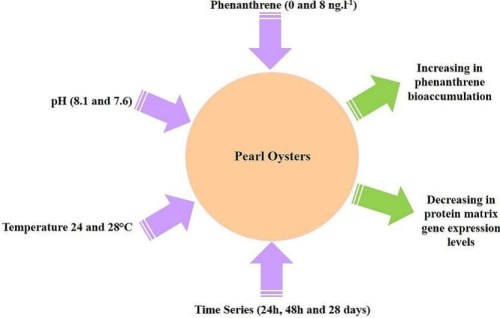
Effect of elevated temperature, sea water acidification, and phenanthrene on the expression of genes involved in the shell and pearl formation of economic pearl oyster (Pinctada radiata)

Highlights

  • Increasing PCO2 and temperature in presence of PAH influence pearl oysters’ status.
  • Barely examined multi-stressor impacts were conducted through full-factorial design.
  • Ocean warming and acidification increase Phe bioaccumulation in oyster soft tissue.
  • All stressors downregulated the studied shell formation-related genes expression.

Abstract

Our study aims to examine the effect of some stressors on the gene expression levels of shell matrix proteins in a pearl oyster. Oysters were exposed to the different combinations of the temperature, pH, and phenanthrene concentration is currently measured in the Persian Gulf and the predicted ocean warming and acidification for 28 days. The expression of all the studied genes was significantly downregulated. Time and temperature had the greatest effects on the decreases in n19 and n16 genes expression, respectively. Aspein and msi60 genes expression were highly influenced by pH. Pearlin was affected by double interaction temperature and phenanthrene. Moreover, a correlation was observed among the expression levels of studied genes. This study represents basic data on the relationship between mRNA transcription genes involved in the shell and pearl formation and climate changes in pollutant presence conditions and acclimatizing mechanism of the oyster to the future scenario as well.

Continue reading ‘Effect of elevated temperature, sea water acidification, and phenanthrene on the expression of genes involved in the shell and pearl formation of economic pearl oyster (Pinctada radiata)’

Transgenerational adaptation to ocean acidification determines the susceptibility of filter-feeding rotifers to nanoplastics

The adaptation of marine organisms to the impending challenges presented by ocean acidification (OA) is essential for their future survival, and mechanisms underlying OA adaptation have been reported in several marine organisms. In the natural environment, however, marine organisms are often exposed to a combination of environmental stressors, and the interactions between adaptive responses have yet to be elucidated. Here, we investigated the susceptibility of filter-feeding rotifers to short-term (ST) and long-term (LT) (≥180 generations) high CO2 conditions coupled with nanoplastic (NPs) exposure (ST+ and LT+). Adaptation of rotifers to elevated CO2 caused differences in ingestion and accumulation of NPs, resulting in a significantly different mode of action on in vivo endpoints between the ST+ and LT+ groups. Moreover, microRNA-mediated epigenetic regulation was strongly correlated with the varied adaptive responses between the ST+ and LT+ groups, revealing novel regulatory targets and pathways. Our results indicate that pre-exposure history to increased CO2 levels is an important factor in the susceptibility of rotifers to NPs.

Continue reading ‘Transgenerational adaptation to ocean acidification determines the susceptibility of filter-feeding rotifers to nanoplastics’

Elevated pCO2 alleviates the toxic effects of polystyrene nanoparticles on the marine microalga Nannochloropsis oceanica

Highlights

  • Inhibition of marine microalgae by polystyrene nanoparticles (100 nm) was evaluated.
  • Increased pCO2 mitigated growth inhibition of algal cells caused by polystyrene nanoparticles.
  • Polystyrene nanoparticles achieve inhibition effect by down-regulating key enzymes of TCA cycle.
  • Increased pCO2 mitigated the toxicity of polystyrene nanoparticles by upregulating ribosomes and corresponding synthesis processes.
  • Aggregation of polystyrene nanoparticles was detected in acidizing experimental medium.

Abstract

Concerns about the environmental effects of nanoplastics on marine ecosystems are increasing. Ocean acidification (OA) has also become a global environmental problem. Plastic pollution occurs concomitantly with anthropogenic climate stressors such as OA. However, the combined effects of NP and OA on marine phytoplankton are still not well understood. Therefore, we have investigated the behavior of ammonia (NH2polystyrene nanoparticles (PS NP) in f/2 medium under 1000 μatm pCO2 and discussed the toxicity of PS NP (100 nm; 0.5 and 1.5 mg/L) on Nannochloropsis oceanica under long and short-term acidification (LA and SA; pCO2 ~ 1000 μatm). We observed PS NP suspended in pCO2 1000 μatm f/2 medium aggregated to a size greater than nanoscale (1339.00 ± 76.10 nm). In addition, we found that PS NP significantly inhibited the growth of N. oceanica at two concentrations, which also produced oxidative stress. Whereas, the growth of algal cells under the coupling of acidification and PS NP was significantly better than that of single PS NP exposure. This indicated that acidification significantly alleviated the toxic effects of PS NP on N. oceanica, and long-term acidification can even promote the growth of N. oceanica under low-density NP. To further understand the mechanism, we analyzed a comparative transcriptome. The results showed that PS NP exposure inhibited the expression of genes involved in the TCA cycle. The acidification was possibly reflected in ribosomes and corresponding processes, which alleviated the negative effects of PS NP on N. oceanica by promoting the synthesis of related enzymes and proteins. This study provided a theoretical basis for assessing the damage of NP to marine phytoplankton under OA. We propose that future studies evaluating the toxicology of NP to marine ecology should consider the changing ocean climate.

Continue reading ‘Elevated pCO2 alleviates the toxic effects of polystyrene nanoparticles on the marine microalga Nannochloropsis oceanica’

Global climate change increases the impact of pollutant mixtures in the model species Paracentrotus lividus

Highlights

  • Impact of chlorpyrifos (CPF) and microplastics (MP) on P. lividus is studied.
  • We also studied if climate change increases the toxicity of these pollutants.
  • CPF has a marked effect on growth of larvae, but less on the fertilisation rate.
  • MP increases the negative effect of CPF on growth and development.
  • Global climate change conditions increase the sensitivity of embryos to MP and CPF.

Abstract

The goal of the present work is to study whether ocean- acidification (OA) and -warming (OW) could increase the toxicity of pollutants on P. lividus. We studied how model pollutants such as chlorpyrifos (CPF) and microplastics (MP), alone or in combination, impact the fertilisation process, and the development of larvae under conditions of OA (dissolved inorganic carbon increase of 126 × 10−6 mol per kg of sea water) and OW (temperature increase of 4 °C) predicted by FAO (Food and Agriculture Organization) for the next 50 years. Fertilisation was determined by microscopic examination after 1 h. Growth, morphology, and alteration level were measured after 48 h of incubation. Results showed that CPF has a marked effect on the growth of larvae, but less on the fertilisation rate. When larvae are exposed to both MP and CPF, the effect on fertilisation and growth is higher than when CPF is added alone. Larvae exposed to CPF tend to adopt a rounded shape which is detrimental to their buoyancy and the combination with other stressors aggravate this situation. The variables most influenced by CPF or its mixtures are those related to body length, body width, and higher levels of body abnormalities, which is consistent with the degenerative effects caused by CPF on sea urchin larvae. The PCA analysis showed that temperature has more influence when embryos or larvae are exposed to a combination of stressors, demonstrating that global climate change drastically increase the impact of CPF on aquatic ecosystems. Overall, in this work we demonstrated that global climate change conditions increase the sensitivity of embryos to MP and CPF. Our findings support the idea that global change conditions could have a severe impact on marine life, increasing the negative effect of toxic agents commonly present in the sea and their mixtures.

Continue reading ‘Global climate change increases the impact of pollutant mixtures in the model species Paracentrotus lividus’

Subscribe

Search

  • Reset

OA-ICC Highlights

Resources