Archive Page 239

Cultivating marine macroalgae in CO2-enriched seawater: a bio-economic approach

Highlights

  • Seasonal variability of temperature under ambient or enriched CO2 conditions affect productivity in two model fleshy seaweeds, Ulva rigida and Gracilaria conferta.
  • The growth of these seaweeds can be doubled when exposed to high CO2 concentrations.
  • Maximal short-run profits were obtained at ca. 22.5 °C and 27.5 °C for U. rigida and G. conferta, respectively.
  • Based on the seaweeds respond to external seasonal changes in temperature and CO2 concentration, farmers may decide what and where to grow seasonally.

Abstract

By the end of the current century atmospheric CO2 concentration may reach 1000 ppm, more than twice the present level set at ca. 400 ppm. Marine macroalgae (seaweeds) contribute to global primary production and by taking up CO2 they may ameliorate and regulate global climate change. Seaweeds also have direct and indirect economic importance by providing food and bioactive compounds for human benefit. Nonetheless, all these benefits could be jeopardized by the ongoing pressures, both local and global, on marine environments. In this study we examine the effects of dissolved CO2 and seasonal seawater temperature on the growth rates (measured weekly changes in biomass and expressed on a daily basis) of two model species, Ulva rigida (Chlorophyta) and Gracilaria conferta (Rhodophyta), which are common in the intertidal zone of the Israeli Mediterranean Sea, and cultivated by the local seaweed industry. The seaweeds were grown in land-based 40 L fiberglass tanks fertilized with sufficient N and P, supplied with running seawater and continuous air bubbling to keep equal exposure of the seaweeds to nutrients and light. The tanks were also provided with aeration with regular air (ambient CO2, ~ 400 ppm) or CO2-enriched air (~780 ppm). Seaweeds exposed to CO2–enriched seawater grew faster, 32.5 and 8.5% growth per day for U. rigida and G. conferta, respectively. Following calculations of productivity rates, market price, and input cost, we estimate production and show a quadratic production function with respect to temperature for each CO2 concentration. Thus, there is an optimal temperature that maximizes seaweed output. Based on the production function estimates and using market prices, maximal short-run profits were obtained at ca. 22.5 °C and 27.5 °C for U. rigida and G. conferta, respectively. These results may provide useful information for seaweed growers on what and where to grow seasonally, and how farming activities should adapt to external changes in temperature and CO2 concentration.

Continue reading ‘Cultivating marine macroalgae in CO2-enriched seawater: a bio-economic approach’

The Byrne lab goes West: three CMS students set sail on 45-day Pacific Ocean cruise

NOAA’s R/V Ronald H. Brown will carry the Byrne crew, as well as 26 other scientists, for the West Coast Acidification 2021 cruise. Photo: NOAA.

The NOAA West Coast Ocean Acidification (WCOA) cruise is part of a decades-long program that monitors chemical parameters all along the west coast of the United States, from Canada to Mexico. The major goal is to understand trends in the Pacific Ocean, with a specific focus on environmental parameters that influence ocean acidification – a major threat to ocean health, food security, economies, and more. The cruise departs for another trek this summer, along with three CMS students on board. Macarena Martín Mayor, Katelyn Schockman, and Kalla Fleger from Bob Byrnes’ lab study chemical oceanography and will be joining the action aboard the R/V Ronald H. Brown.

The team will sample the same 145 stations that have been sampled for decades. Of the 26 scientists on the cruise representing labs from all across the world, each group is tasked with a specific parameter to measure. These range from total alkalinity to inorganic carbon to nutrients. Like a puzzle, each group will piece together their speciality to create a broader picture of the chemical conditions in the Pacific Ocean.

Continue reading ‘The Byrne lab goes West: three CMS students set sail on 45-day Pacific Ocean cruise’

SOCAT version 2021 is released!

SOCAT wants to highlight the work by the regional and global groups – further information about these groups can be found here. We further thank all data contributors, quality controllers and other contributors for version 2021

The Surface Ocean CO₂ Atlas (SOCAT) is a synthesis activity for quality-controlled, surface ocean fCO₂ (fugacity of carbon dioxide) observations by the international marine carbon research community (>100 contributors). SOCAT data is publicly available, discoverable and citable. SOCAT enables quantification of the ocean carbon sink and ocean acidification and evaluation of ocean biogeochemical models. SOCAT, which celebrated its 10th anniversary in 2017, represents a milestone in biogeochemical and climate research and in informing policy.

SOCAT data are released in versions. Each succeeding version contains new data sets as well as updates of older ones. The first version of SOCAT was released in 2011, the second and third version followed biennially. Automation allowed annual public releases since version 4. The latest SOCAT version (version 2021) has 30.6 million observations from 1957 to 2020 for the global oceans and coastal seas. Calibrated sensor data are also available.

SOCAT version 2021 was released on the 15th of June 2021, containing data submitted on or before 15th of January 2021. Data submissions for the next version are welcome at any time, and will be included in the next SOCAT release in 2022.

SOCAT is a core Global Ocean Observing System data product for biogeochemistry endorsed by the Global Ocean Observing System GOOS.

Surface ocean CO₂ from ships, drifters and autonomous surface platforms and moorings for all data in SOCAT version 2021.
Continue reading ‘SOCAT version 2021 is released!’

Satellite observations are needed to understand ocean acidification and multi-stressor impacts on fish stocks in a changing Arctic Ocean

It is widely projected that under future climate scenarios the economic importance of Arctic Ocean fish stocks will increase. The Arctic Ocean is especially vulnerable to ocean acidification and already experiences low pH levels not projected to occur on a global scale until 2100. This paper outlines how ocean acidification must be considered with other potential stressors to accurately predict movement of fish stocks toward, and within, the Arctic and to inform future fish stock management strategies. First, we review the literature on ocean acidification impacts on fish, next we identify the main obstacles that currently preclude ocean acidification from Arctic fish stock projections. Finally, we provide a roadmap to describe how satellite observations can be used to address these gaps: improve knowledge, inform experimental studies, provide regional assessments of vulnerabilities, and implement appropriate management strategies. This roadmap sets out three inter-linked research priorities: (1) Establish organisms and ecosystem physiochemical baselines by increasing the coverage of Arctic physicochemical observations in both space and time; (2) Understand the variability of all stressors in space and time; (3) Map life histories and fish stocks against satellite-derived observations of stressors.

Continue reading ‘Satellite observations are needed to understand ocean acidification and multi-stressor impacts on fish stocks in a changing Arctic Ocean’

Coastal Ocean Data Analysis Product in North America (CODAP-NA) – an internally consistent data product for discrete inorganic carbon, oxygen, and nutrients on the North American ocean margins (update)

Internally consistent, quality-controlled (QC) data products play an important role in promoting regional-to-global research efforts to understand societal vulnerabilities to ocean acidification (OA). However, there are currently no such data products for the coastal ocean, where most of the OA-susceptible commercial and recreational fisheries and aquaculture industries are located. In this collaborative effort, we compiled, quality-controlled, and synthesized 2 decades of discrete measurements of inorganic carbon system parameters, oxygen, and nutrient chemistry data from the North American continental shelves to generate a data product called the Coastal Ocean Data Analysis Product in North America (CODAP-NA). There are few deep-water (> 1500 m) sampling locations in the current data product. As a result, crossover analyses, which rely on comparisons between measurements on different cruises in the stable deep ocean, could not form the basis for cruise-to-cruise adjustments. For this reason, care was taken in the selection of data sets to include in this initial release of CODAP-NA, and only data sets from laboratories with known quality assurance practices were included. New consistency checks and outlier detections were used to QC the data. Future releases of this CODAP-NA product will use this core data product as the basis for cruise-to-cruise comparisons. We worked closely with the investigators who collected and measured these data during the QC process. This version (v2021) of the CODAP-NA is comprised of 3391 oceanographic profiles from 61 research cruises covering all continental shelves of North America, from Alaska to Mexico in the west and from Canada to the Caribbean in the east. Data for 14 variables (temperature; salinity; dissolved oxygen content; dissolved inorganic carbon content; total alkalinity; pH on total scale; carbonate ion content; fugacity of carbon dioxide; and substance contents of silicate, phosphate, nitrate, nitrite, nitrate plus nitrite, and ammonium) have been subjected to extensive QC. CODAP-NA is available as a merged data product (Excel, CSV, MATLAB, and NetCDF; https://doi.org/10.25921/531n-c230https://www.ncei.noaa.gov/data/oceans/ncei/ocads/metadata/0219960.html, last access: 15 May 2021) (Jiang et al., 2021a). The original cruise data have also been updated with data providers’ consent and summarized in a table with links to NOAA’s National Centers for Environmental Information (NCEI) archives (https://www.ncei.noaa.gov/access/ocean-acidification-data-stewardship-oads/synthesis/NAcruises.html).

Continue reading ‘Coastal Ocean Data Analysis Product in North America (CODAP-NA) – an internally consistent data product for discrete inorganic carbon, oxygen, and nutrients on the North American ocean margins (update)’

A comparative accuracy of regularized and tension spline methods to estimate and model the surface water pH of Pulau Tuba, Langkawi, Kedah

This research is conducted to assess the accuracy of spline interpolation methods to predict and model the surface water pH of Pulau Tuba, Langkawi, Kedah, Malaysia. In-situ sampling activities using pH-meter and Geographic Positioning Systems (GPS) were carried out during high tides and at noon in November 2018. The development of spatial models were constructed using the Regularized and Tension spline methods. Then, validation of models was carried out to compare the observed and predicted values of pH using correlation analysis, regression analysis, and error analysis. The accuracy of the developed map was calculated using the overall accuracy equation. The research found that the regularized spline method had more accuracy in estimating surface water pH variability than the tension spline method. The Pearson correlation coefficient (r), Coefficient of determination (R2), Mean Absolute Error (MAE) and Root Mean Square Error (RMSE) were reported at 0.896, 0.803, 0.0265 and 0.0344 for the regularized spline method, respectively. The developed spatial model was then transformed into a map by adding map elements such as legend, title, north arrow, and scales for effective visualization. The developed map has an accuracy of 87.50%. The surface water pH was found at the range of 7-8. The low reading of pH is expected due to the addition of rainwater that lowered the pH of the coastal water of Pulau Tuba, Langkawi, Kedah. The research outcomes would benefit the government and non-government agencies to monitor the coastal and ocean acidification and the development of strategic policies and rules to reduce the impact of anthropogenic activities and climate change for this area.

Continue reading ‘A comparative accuracy of regularized and tension spline methods to estimate and model the surface water pH of Pulau Tuba, Langkawi, Kedah’

The effects of temperature and pH change on the snapping sound characteristic of Alpheus edwardsii

Aim: The current study undertook manipulative experiments to observe changes in snapping shrimp sound signals in relation to temperature and pH changes.

Methodology: Sounds of intertidal snapping shrimp (Alpheus edwardsii) sequentially exposed to different temperature/pH treatments manipulation for a period of 2 week each, were recorded in the laboratory and analysed. The acoustic characteristics of snapping sound signal were examined to relate to the change in temperature, pH and combination of both parameters.

Results: Our results showed that there was a significant reduction in the frequency of peak amplitude of snapping sound wave following a two week exposure to a combination of temperature and pH treatments. The frequency of snapping shrimp sound decreased by approximately 30% when exposed to a 2°C increase in temperature and a 0.7 unit decrease in pH, however, elevated temperature alone caused no significant effect on the peak frequency of snapping shrimp sound.      

Interpretation: The finding suggests that following the prediction values of temperature and pH changes due to climate change in the coming century may implicate the ambient noise at habitats where snapping shrimps dominate.

Continue reading ‘The effects of temperature and pH change on the snapping sound characteristic of Alpheus edwardsii’

Ocean acidification modulates the impact of fluoxetine on larval behaviors of non-target organisms

Emerging pollutants, such as pharmaceuticals from human waste, are continuously released into aquatic systems. Although pharmaceuticals alone can adversely impact marine organisms, the bioavailability of many pharmaceuticals are dependent on ambient physical conditions, like pH. As few studies have considered the interactive effects of pharmaceutical pollution and anthropogenic ocean acidification, this study investigated the behavioral response of larval sea urchins (Heliocidaris crassispina) and ascidians (Styela plicata) to environmentally-relevant concentrations of fluoxetine (10 and 100 ng L-1) under ambient (pH 8.0) and acidified conditions (pH 7.7). Larval ascidians reared at pH 8.0 exhibited swam in slower, more directed paths with increasing fluoxetine. Interestingly, this effect was absent at pH 7.7. On the other hand, I only observed independent effects of fluoxetine and acidification on urchin swimming behavior. My findings highlight the importance of using behavioral endpoints when assessing the realistic sub-lethal organismal and ecological impacts of anthropogenic stressors, and that considering differences in species traits may allow for the generation of more realistic predictions of the impact of emerging pollutants under future climate scenarios.

Continue reading ‘Ocean acidification modulates the impact of fluoxetine on larval behaviors of non-target organisms’

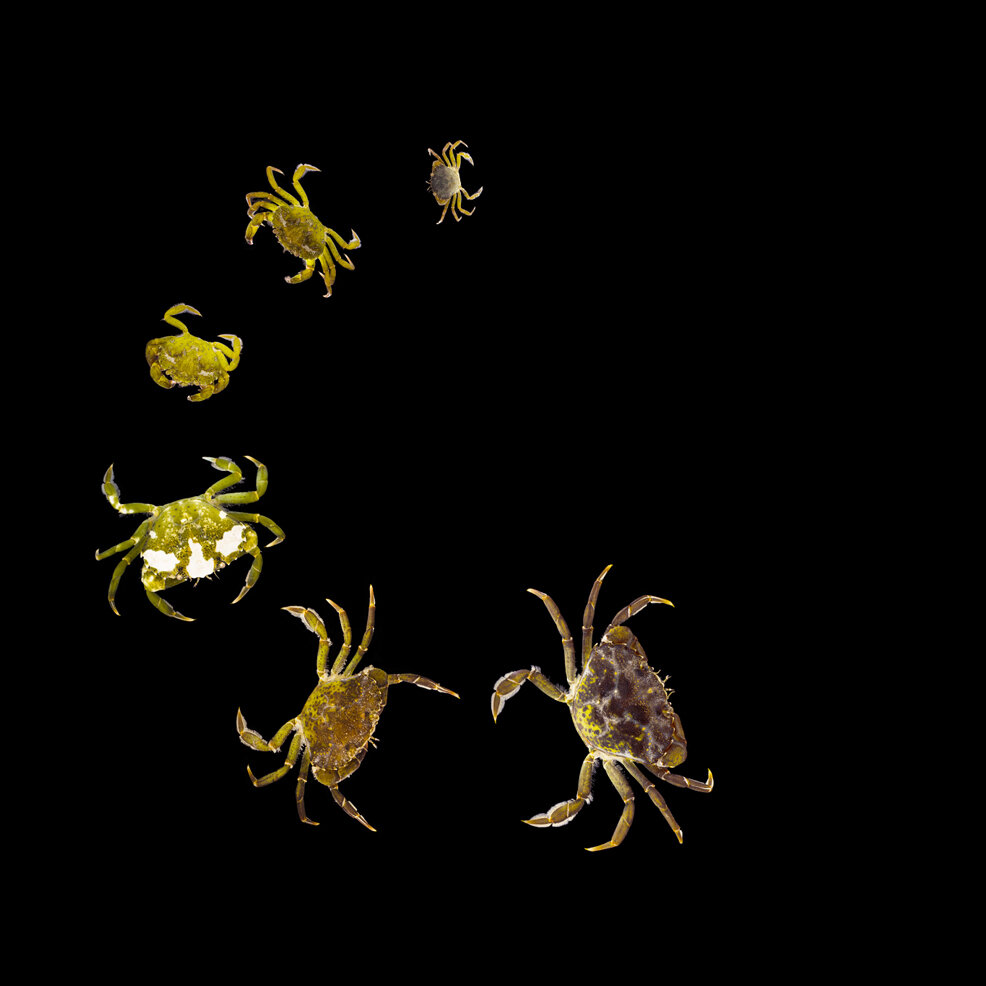
Crabs — the fall of Karkinos

Many of us have spent time alongside the rocky shore, bucket and net in hand, wading through the rockpools as we turn over clumps of seaweed and large rocks in the hopes of finding tiny marine creatures. Shrimps and fish, iridescent periwinkles, anemones, and all sorts of oddities to fascinate us. Then, we glimpse something scuttling across the sandy floor – we reach out, submerging our arms up to our elbows as we try and grasp the beast. Fingers frozen from the cold; we fumble around for a grip as we carefully bring it out from its hidey hole. 

Shore Crabs. Photo: Saskia Sicherman

A beautiful shore crab, shining green with its claws raised in annoyance. A dweller of the coast, a scavenger with an attitude. These animals are common finds along the UK shoreline, and are always a delight to discover lurking beneath a rock or buried under seaweed. Finding these stunning creatures is always a great joy, one that has brought many smiles to the faces of avid rock poolers. 

Of course, it is unlikely that we will ever see crabs of such size (though over 80% of the ocean remains unexplored, so who knows) yet the unfortunate reality is that crab shells are disintegrating, though not due to a Herculean force. 

Continue reading ‘Crabs — the fall of Karkinos’

Outwelling of total alkalinity and dissolved inorganic carbon from the Hooghly River to the adjacent coastal Bay of Bengal

The seasonal variability of the lateral flux of total alkalinity (TAlk) and dissolved inorganic carbon (DIC) of the tropical Hooghly estuary is analyzed in this work. In situ observations of water temperature, salinity, dissolved oxygen, TAlk, and pH were measured in four different stations of the Hooghly estuary. It was measured once every month during 2015–2016, and subsequently, DIC was estimated. A carbon budget was constructed to quantify carbon flows through the freshwater-marine continuum of the Hooghly estuary, and plausible impacts on the adjacent coastal ocean, the northern Bay of Bengal, were examined. The biogeochemical mass balance box model was used to compute the seasonal flow of carbon flux, and subsequently, the annual budgeting of lateral fluxes of TAlk and DIC to the adjacent coastal ocean was carried out. The net annual TAlk and DIC flux from the Hooghly estuary to the adjacent coastal ocean were 4.45 ± 1.90 × 1011 mol and 4.59 ± 1.70 × 1011 mol, respectively. The net annual DIC flux of the Hooghly estuary is about 30 to 60 times higher than surface area integrated air–water CO2 flux, which is an indication of promoting acidification in the adjacent coastal ocean. The present study indicates that the lateral DIC flux has increased substantially in the Hooghly estuary during the last two decades. The increase in inorganic carbon load in the Hooghly estuary due to the enhanced discharge of inorganic and organic matter load in the upper reaches of the estuary led to this increase in lateral DIC flux. The results strongly establish the need of having such regional studies for better understanding the estuarine carbon dynamics, and its role in controlling the adjacent coastal ocean dynamics.

Continue reading ‘Outwelling of total alkalinity and dissolved inorganic carbon from the Hooghly River to the adjacent coastal Bay of Bengal’

Long-term variation in dissolved inorganic carbon and ocean acidification indices in the Northwest Pacific from 1993 to 2018: a study of a biogeochemical model with an operational ocean model product and observational evidence

The multi-decadal variation in ocean acidification indices in the Northwest Pacific was examined using a biogeochemical model with an operational ocean model product for the period 1993–2018. We found that ocean acidification varied regionally in the Northwest Pacific. The surface ocean (above 100 m depth) underwent acidification that progressed more quickly in the subtropical region and the Kuroshio extension than in the subarctic region due to vertical mixing of the dissolved inorganic carbon (DIC) supply exceeding DIC release by air–sea exchange. Below 100 m depth, acidification and alkalinization occurred in the subtropical and subarctic regions, respectively. We attribute these regional differences in acidification and alkalinization to spatially variable biological processes in the upper layer and physical redistribution of DIC, both horizontally and vertically.

Continue reading ‘Long-term variation in dissolved inorganic carbon and ocean acidification indices in the Northwest Pacific from 1993 to 2018: a study of a biogeochemical model with an operational ocean model product and observational evidence’

Characteristics and Inter-citation network of 100 most influential studies on ocean acidification: a bibliometric analysis

In this study, we aimed to evaluate the trends of the most cited articles on ocean acidification using bibliometric techniques and to provide oceanographers and marine scientists a practical guide in assessing the most influential studies published on this domain. Scopus database is used to extract the literature, and detailed analysis was carried out to identify trends and significant of these studies. The top cited article received 3,183 citations and the least received 201, with a mean of 462 citations. These 100 most-cited papers originated from 34 different countries. The USA ranked top with the highest number of publications followed by Germany and Australia. The top five journals (Science, PNAS, Global Change Biology, Marine Ecology Progress Series, Nature) hold 40% of these influential studies. The thematic cluster analysis showed a composite characteristic of the research domain. The study indicated that a limited of the works focus on impact of ocean acidification on food web that needs to be urgently addressed by the oceanographic community. The study of the carbonate system in coastal, oceanic, and estuaries waters, and its ecological and biogeochemical implications are the emerging areas that required attention for the sustainability and maintaining a healthy balance of the marine ecosystem.

Continue reading ‘Characteristics and Inter-citation network of 100 most influential studies on ocean acidification: a bibliometric analysis’

Scientists extract carbon dioxide from the ocean by turning it to rock

Human-induced climate change is one of the most prevalent threats we are facing as a species, and to combat this, we must change our way of living and innovate new solutions to temper the damage that has already been done.

For instance, carbon emissions in the atmosphere need to be reduced at a much faster rate than nature allows. For every ton of carbon dioxide, we pump into the air, approximately a quarter of it gets absorbed by the ocean like a sponge. The excess carbon dioxide present in these bodies of water acidifies it and threatens biodiversity.

Most of the efforts to pull carbon dioxide from the environment focus on pulling the gas directly from the atmosphere, which has proven to be challenging and expensive. In contrast, Gaurav Sant, a civil and environmental engineering professor and director of the Institute for Carbon Management at the University of California, Los Angeles, is leading a team that is researching new, innovative ways to more efficiently extract CO2 from the environment.

Large bodies of water, like oceans, hold more than 150 times more carbon dioxide than the air. Instead of focusing on extracting gas from the air, Sant and his colleagues propose removing carbon from the ocean, allowing the ocean to absorb more gas from the atmosphere to maintain the balance. How do they want to do this? By turning the carbon extracted from the ocean into rock.

The proposed facility for this process would look like a water treatment plant, but instead of sifting impurities out of the water, the systems would use electricity to force carbon, calcium, and magnesium to react and become solids. The carbon-free water would then get put back into the ocean.

A wonderful side effect of returning the water to the ocean is that what gets returned is actually a bit more alkaline than what was extracted. This more alkaline water may mitigate the effects of ocean acidification in its immediate vicinity.

The Optimist Daily, 14 June 2021. Full article.

Mini-symposium for Bering Sea crabbers highlights ocean acidification and warming

On May 26, members of the Bering Sea crabbing industry met with researchers to discuss the latest science on ocean acidification and climate as it relates to crab in the region.  Nearly 50 people joined the conversation that was hosted by the Alaska Bering Sea Crabbers, the Bering Sea Fisheries Research Foundation, and the Alaska Ocean Acidification Network.

Some of the take homes included:

Continue reading ‘Mini-symposium for Bering Sea crabbers highlights ocean acidification and warming’

Ocean acidification science stands strong

In his News Feature “Sea of doubts” (7 May, p. 560), M. Enserink reports on fraud allegations in about one-fourth of the studies analyzing the impact of ocean acidification on fish behavior. As institutions work to determine whether there is truth to the allegations, which have not yet been independently verified, the public and policy-makers should remember that the outcome will not change the current scientific consensus: Ocean acidification is a major threat to marine species, ecosystems, and associated services.

No single article, research team, or approach can explain the complexity of the consequences of ocean acidification (1). Over the past two decades, thousands of scientific articles have been published in this field, combining a wide range of approaches and methods from monitoring, paleo investigations, and modeling to laboratory, natural, and field experiments (2). The Fifth Assessment Report of the Intergovernmental Panel on Climate Change (IPCC) (34) concluded with high confidence that both positive and negative impacts on marine organisms and ocean processes occur and that responses can be influenced, and often exacerbated, by other drivers such as warming and hypoxia. The effect on fish behavior is mentioned in the report, but it only marginally contributed to the IPCC conclusions and was assigned a medium to low confidence level in light of uncertainty about the long-term persistence of behavioral disturbances.

The science of ocean acidification stands strong whatever the outcome of the investigations of potential misconduct in the area of effects on fish behavior. Failure to quickly mitigate ocean acidification through ambitious reduction of CO2 emissions would have substantial consequences for the ocean and human societies.

Dupont S., Gattuso J.-P., Pörtner H.-O. & Widdicombe S., 2021. Ocean acidification science stands strong. Science 372(6547): 1160-1161. Article.

Declining growth rates of global coral reef ecosystems

Bleaching and cyclone damage to reefs at Lord Howe Island, Australia, observed in March 2019. Credit: Kay Davis

If the trend of declining coral growth continues at the current rate, the world’s coral reefs may cease calcifying around 2054, a new Southern Cross University study has found.

Drawing on research from the late 1960s until now, the paper published in Communications Earth & Environment reveals the global spatiotemporal trends and drivers of coral reef ecosystem growth (known as calcification).

One hundred and sixteen studies from 53 published papers were analyzed.

“It is known that coral reefs have been degrading over time. Our study relies on historical data to quantify the current rate of decline and indicates what could be happening in the future,” said project leader Dr. Kay Davis.

Continue reading ‘Declining growth rates of global coral reef ecosystems’

Global coral reef ecosystems exhibit declining calcification and increasing primary productivity

Long-term coral reef resilience to multiple stressors depends on their ability to maintain positive calcification rates. Estimates of coral ecosystem calcification and organic productivity provide insight into the environmental drivers and temporal changes in reef condition. Here, we analyse global spatiotemporal trends and drivers of coral reef calcification using a meta-analysis of ecosystem-scale case studies. A linear mixed effects regression model was used to test whether ecosystem-scale calcification is related to seasonality, methodology, calcifier cover, year, depth, wave action, latitude, duration of data collection, coral reef state, Ωar, temperature and organic productivity. Global ecosystem calcification estimated from changes in seawater carbonate chemistry was driven primarily by depth and benthic calcifier cover. Current and future declines in coral cover will significantly affect the global reef carbonate budget, even before considering the effects of sub-lethal stressors on calcification rates. Repeatedly studied reefs exhibited declining calcification of 4.3 ± 1.9% per year (x̄  = 1.8 ± 0.7 mmol m−2 d−1 yr−1), and increasing organic productivity at 3.0 ± 0.8 mmol m−2 d−1 per year since 1970. Therefore, coral reef ecosystems are experiencing a shift in their essential metabolic processes of calcification and photosynthesis, and could become net dissolving worldwide around 2054.

Continue reading ‘Global coral reef ecosystems exhibit declining calcification and increasing primary productivity’

Impact of dust addition on the microbial food web under present and future conditions of pH and temperature

In the oligotrophic waters of the Mediterranean Sea, during the stratification period, the microbial loop relies on pulsed inputs of nutrients through atmospheric deposition of aerosols from both natural (Saharan dust) and anthropogenic origins. While the influence of dust deposition on microbial processes and community composition is still not fully constrained, the extent to which future environmental conditions will affect dust inputs and the microbial response is not known. The impact of atmospheric wet dust deposition was studied both under present and future (warming and acidification) environmental conditions through experiments in 300 L climate reactors. Three dust addition experiments were performed with surface seawater collected from the Tyrrhenian Sea, Ionian Sea and Algerian basin in the Western Mediterranean Sea during the PEACETIME cruise in May–June 2017. Top-down controls on bacteria, viral processes and community, as well as microbial community structure (16S and 18S rDNA amplicon sequencing) were followed over the 3–4 days experiments. Different microbial and viral responses to dust were observed rapidly after addition and were most of the time higher when combined to future environmental conditions. The input of nutrients and trace metals changed the microbial ecosystem from bottom-up limited to a top-down controlled bacterial community, likely from grazing and induced lysogeny. The composition of mixotrophic microeukaryotes and phototrophic prokaryotes was also altered. Overall, these results suggest that the effect of dust deposition on the microbial loop is dependent on the initial microbial assemblage and metabolic state of the tested water, and that predicted warming, and acidification will intensify these responses, affecting food web processes and biogeochemical cycles.

Continue reading ‘Impact of dust addition on the microbial food web under present and future conditions of pH and temperature’

Hands-on exploration of ocean acidification with a living calcifier

This hands-on lab allows students to explore concepts and quantify effects of ocean acidification. Many laboratory activities simplify ocean acidification through computer simulations or dripping acid on nonliving materials (e.g., sea shells) but do not provide adequate opportunities for students to measure, inquire, or see real consequences for living organisms. Thus, we developed this low-cost, easily accessible experiment to imitate ocean acidification on living, calcifying organisms.

Continue reading ‘Hands-on exploration of ocean acidification with a living calcifier’

Digital summer school – From bones to oceans and space: the untold stories of biomineralization

7 – 9 July 2021

Deadline for registration and abstract submission : June 18, 2021

Pdf

9 July, 11.00-11.05 (Part 2): “Ocean acidification and its impact on biomineralizing organisms, Alex Venn, Monaco”

Organizing Committee: 

  • Claudine Blin, LP2M UMR7370, CNRS-UCA, Nice, France
  • Sylvie Tambutté, Centre Scientifique de Monaco, Monaco
  • Georges Lefthériotis, LP2M UMR7370, CNRS-UCA, Nice, France

Support:
COST Action EuroSoftCalcNet 

Description:
Biomineralization is a highly complex and active biological process that takes into account different aspects, including molecular, cellular and integrative biology, evolution, clinical and therapeutic aspects up to societal and environmental facts. Biomineralization is also a multidisciplinary field comprising biology, chemistry, physics, medicine and environmental sciences. This Digital Summer School is intended to unveil this interdisciplinarity and will give a unique opportunity to young research fellows who wish to enter this field of research to interact with internationally renowned experts.
This Summer School is open to young scientists (PhD, post-docs and early scientists). The program is built on 3 days of courses, interactive workshops, round tables and networking. There will be time for students to present their research projects and receive feedback from the experts.
The aim of this Summer School is to promote general knowledge on all aspects of biomineralization. The course starts with fundamentals aspects of biomineralization, followed by a varied program that integrates clinical, societal and environmental aspects.

Continue reading ‘Digital summer school – From bones to oceans and space: the untold stories of biomineralization’

Subscribe

Search

  • Reset

OA-ICC Highlights

Resources