Archive for the 'Media coverage' Category


Acidified waters off Hokkaido threaten survival of ‘ice angels’

Clione, translucent sea slugs dubbed “angels in drift ice,” could be wiped out off eastern Hokkaido because increasingly acidic seawater from carbon dioxide emissions is destroying their sole food source, studies show.

In waters of Japan’s northernmost main island, Clione limacine, a 2-centimeter-long variant also known as the naked sea butterfly, feast on a small sea snail species called Limacina helicina, whose clear, glass-like shells measure 3 to 5 millimeters in diameter.

Katsunori Kimoto, a senior researcher at the Japan Agency for Marine-Earth Science and Technology, said the snails’ shells are dissolving and developing holes in the Arctic Ocean.

Kimoto said higher concentrations of airborne CO2 from human activities, such as burning fossil fuels, have increased the volume of CO2 that dissolves in seawater.

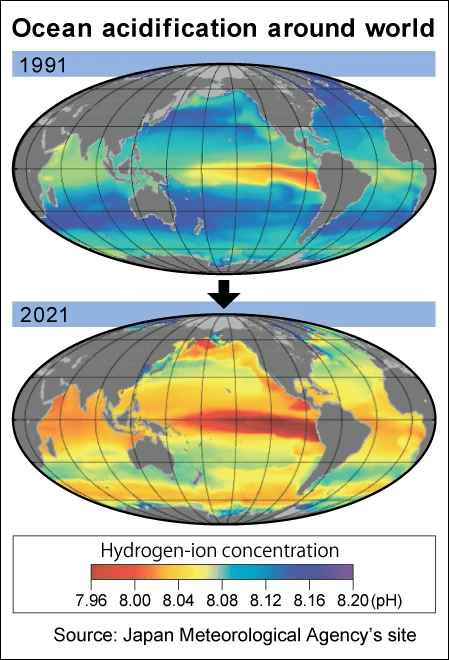
The resultant chemical reactions have decreased the hydrogen-ion concentration measured in pH in oceans.

According to the Japan Meteorological Agency, the pH level for surface seawater around the world is about 8.1, meaning the alkaline level is still strong. But the figure is projected to reach a more acidic 7.7 by the end of this century.

The phenomenon is making it difficult for Limacina helicina to maintain a healthy external structure because its shell is made of calcium carbonate, which is vulnerable to dissolving in high acidity levels.

Continue reading ‘Acidified waters off Hokkaido threaten survival of ‘ice angels’’

Reef monitoring structure installed at Pulau Gaya

Edwin (second from left) presenting the award to Gillian.

 The Marine Ecology Research Centre (MERC) at Pulau Gaya completed installing and commissioning Autonomous Reef Monitoring Structure (ARMS) and Calcification Accretion Units (CAUs) on February 2.

The successful deployment was led by Professor Dato’ Dr Aileen Tan, director of the Centre for Marine and Coastal Studies (CEMACS), Universiti Sains Malaysia, Penang.

“This is the first step in a research collaboration between MERC and the Intergovernmental Oceanographic Commission (IOC) of UNESCO, following the protocol established by National Oceanic and Atmospheric Administration (NOAA),” said MERC’s project director Alvin Wong in a statement issued in conjunction with the award from the Malaysia Book of Records for the MERC – The First Ocean Acidification Monitoring Station for South China Sea held at Le Meridien on Monday.

The award was presented to ECHO Resorts owner, Gillian Tan by The Malaysia Book of Records Senior Record Consultant, Edwin Yeoh.

He added that this was also an effort to achieve the Sustainable Development Goal 14: Life below water.

“The research under the title ‘Research and Monitoring of the Ecological Impacts of Ocean Acidification on Coral Reef Ecosystems’ would improve the understanding of ocean acidification and the potential damaging effects of ocean acidification on marine resources and ecosystems,” he said.

Continue reading ‘Reef monitoring structure installed at Pulau Gaya’

New study suggests acidification from climate change could harm sea scallop populations

Jamie Sewell of Warren prepares his boat for a scallop diving off the coast of Cushing in January 2015. Gabe Souza/Staff Photographer, file.

A new study co-authored by federal scientists and Massachusetts Maritime Academy staff and students suggests that increased ocean acidification could pose a threat to the sea scalloping industry in the Gulf of Maine and elsewhere along the Atlantic seaboard.

It marks the first time that the impact of ocean acidification on sea scallops has been studied to this extent.

In an eight-week research project, scientists with the National Oceanic and Atmospheric Administration collaborated with the academy to conduct the study at the school’s aquaculture lab on Buzzards Bay in Massachusetts. They concluded that ocean acidification could significantly depress Atlantic sea scallop productivity in the years ahead.

Their study, which was published March 1, also found that pH levels – the measure of acidity – in the Gulf of Maine are dropping faster than at other locations on the East Coast, meaning acidity is increasing. Ocean acidification rises as the ocean absorbs more carbon dioxide from the atmosphere.

Continue reading ‘New study suggests acidification from climate change could harm sea scallop populations’

Scientists seek ways to save marine life from ocean acidification

The long-term impacts of acidification on ocean waters are causing higher mortality in sea life, but scientists at Oregon State University are searching for solutions.

Oyster farmers were the first hit in the early 2000s with $110 million in production losses.

“Seed farmers, they grow the oysters that are young, that are planted out; they were having real problems about a decade ago, but because of, basically, being able to measure the chemistry and knowing now how to augment that water that’s going into the hatchery, they’re back in business,” said Oregon State University professor Francis Chan.

In response to the death rates among oyster larvae, Oregon State University started doing research on water chemistry to identify the problem.

The discovery was that carbon dioxide emissions in the air were being absorbed by the ocean, presenting a challenge to marine life trying to form their shells.

“It’s the other side of the carbon dioxide problem for the ocean because we know that carbon dioxide can change the climate, but carbon dioxide can just straight up be dissolved in sea water. And the more carbon dioxide we emit, the more it goes in the ocean. The problem is, carbon dioxide, when it’s in the ocean, it acidifies it,” said Chan.

Continue reading ‘Scientists seek ways to save marine life from ocean acidification’

Ocean acidification around the UK and Ireland

Sea

Ocean acidification is a pressing global issue, but what are its impacts more locally to the UK and Ireland? A report led by scientists at Plymouth Marine Laboratory highlights just this, with concerning findings. 

What is ocean acidification

The term ocean acidification is used to describe the ongoing decrease in ocean pH caused by human carbon dioxide (CO2) emissions, such as the burning of fossil fuels. 

The carbon dioxide goes up into the atmosphere, but it doesn’t stay there. It is absorbed by the ocean, it dissolves into the sea water, and it reacts with the chemistry of the seawater and creates carbonic acid. 

Regardless of where it is emitted, anthropogenic CO2 is mixed throughout the Earth’s atmosphere by wind and weather. The increasing amount of CO2 taken up by the oceans and corresponding pH decline are therefore global phenomena. 

What are the impacts of ocean acidification on a global level? 

On a global level, atmospheric CO2 exceeded 414 parts per million (ppm) in 2021 – a 49% increase above pre-industrial levels – and this has continued to increase by approximately 2.4 ppm per year over the last decade. This ongoing increase is primarily due to CO2 release by fossil fuel combustion, cement production and land-use change (mainly deforestation). 

Dr Helen Findlay, Biological Oceanographer at Plymouth Marine Laboratory, who led the study, said: 

“Ocean acidification can influence marine species in a number of ways, including direct impacts on internal physiology or indirectly through changes to food webs and processes.” 

“Some species are already showing effects from ocean acidification when exposed to short-term fluctuations, and these could be used as indicator species for long-term impacts on marine ecosystems.” 

Continue reading ‘Ocean acidification around the UK and Ireland’

Why do oceans matter for climate change?

Oceans are the planet’s greatest carbon sink, absorbing up to 30 per cent of the human-caused greenhouse gas emissions fuelling the climate crisis. Photo of Deepwater Horizon fire / US Coast Guard / Wikipedia

As the climate crisis gets worse, oceans — the planet’s greatest carbon sink — can no longer be overlooked.

Spanning 70 per cent of the globe, oceans have absorbed nearly a third of the planet-warming greenhouse gas emissions caused by humans and 90 per cent of the excess heat those gases create.

The heat stored in the Earth’s entire atmosphere is equal to what’s stored in the top few metres of our oceans. If that wasn’t enough, oceans produce more than 50 per cent of the planet’s oxygen and regulate our climate and weather patterns.

Oceans clearly do some heavy lifting but get little attention on the world stage.

In Canada, home of the world’s longest coastline, we can’t meet our climate and biodiversity goals without paying greater attention to the threats oceans face and the solutions they can provide. Especially as the feds doubled down on their pledge to protect 30 per cent of Canada’s waters and lands by 2030 at last month’s COP15 biodiversity summit in Montreal.

As part of a new Canada’s National Observer series breaking down climate basics, we’re diving into some common questions about how and why oceans matter to climate change.

What is ocean acidification?

Greater amounts of CO2 in the ocean reduce the water’s pH levels, making it more acidic, along with its levels of calcium carbonate — a key building block for many creatures’ shells or skeletons, such as crabs, shellfish, prawns, corals, sea urchins and tiny marine snails, called pteropods, which fish like salmon depend on for food. Some of the initial red flags around ocean acidification surfaced in Washington state and Oregon a decade ago when shellfish hatcheries suffered massive die-offs of baby oysters.

Continue reading ‘Why do oceans matter for climate change?’

Cop15: historic deal struck to halt biodiversity loss by 2030

The Cop15 agreement in Montreal is the culmination of more than four years of negotiations. Photograph: Julian Haber/Courtesy of Environment and Climate Change Canada.

Governments appear to have signed a once-in-a-decade deal to halt the destruction of Earth’s ecosystems, but the agreement seems to have been forced through by the Chinese president, ignoring the objections of some African states.

After more than four years of negotiations, repeated delays due to the Covid-19 pandemic and talks into the night on Sunday in Montreal, nearly 200 countries – but not the US or the Vatican – signed an agreement at the biodiversity Cop15, which was co-hosted by Canada and China, to put humanity on a path to living in harmony with nature by the middle of the century.

In an extraordinary plenary that began on Sunday evening and lasted for more than seven hours, countries wrangled over the final agreement. Finally, at about 3.30am local time on Monday, news broke that an agreement had been struck.

Amid plummeting insect numbers, acidifying oceans filled with plastic waste, and the rampant overconsumption of the planet’s resources as humanity’s population grows wealthier and soars past 8 billion, the agreement, if implemented, could signal major changes to farming, business supply chains and the role of Indigenous communities in conservation.

The deal was negotiated over two weeks and includes targets to protect 30% of the planet for nature by the end of the decade, reform $500bn (£410bn) of environmentally damaging subsidies, and restore 30% of the planet’s degraded terrestrial, inland water, coastal and marine ecosystems.

Continue reading ‘Cop15: historic deal struck to halt biodiversity loss by 2030’

Ocean geoengineering scheme aces its first field test

A nontoxic dye tracked a plume of lime that neutralized acidic waters in a Florida estuary. WADE MCGILLIS.

The balmy, shallow waters of Apalachicola Bay, off Florida’s panhandle, supply about 10% of U.S. oysters. But the industry has declined in recent years, in part because the bay is warming and its waters are acidifying because of rising carbon dioxide (CO2) levels. Things got so bad that in 2020, the state banned oyster harvesting for 5 years. Soon afterward, state officials encouraged climate scientists to perform an unusual experiment to see whether they could reverse the changes in the water.

In May, at an Apalachicola estuary, the researchers injected some 2000 liters of seawater enriched with lime, an alkaline powder and a primary ingredient in cement that’s derived from chalk or limestone. They showed it neutralized some of the acidity and, in the process, drew CO2 out of the atmosphere.

It is the first field demonstration of the technique, called ocean liming, that they know of. “It is precious getting this response in a real system,” says Wade McGillis, an engineer and climate scientist at the University of Notre Dame who helped lead the work, which was presented this week at a meeting of the American Geophysical Union.

The experiment is also a rare test of geoengineering, the controversial proposition of artificially altering the atmosphere or ocean to counteract the effects of rising CO2. For ocean geoengineering, “normalizing doing these experiments is really good,” says Ken Caldeira, a climate scientist at the Carnegie Institution for Science. Such demonstrations can allay fears by showing small-scale perturbations do not cause lasting environmental or ecological damage, he says.

The ocean already blunts the effects of climate change, naturally absorbing 30% of annual carbon emissions. But as it dissolves in the water, the CO2 combines with calcium and other ions, depleting them. As a result, the pH of the waters drops, harming marine life, and CO2 uptake slows. “Alkaline enhancement” aims to reset the water chemistry.

Liming is one approach. The added calcium hydroxide, or lime, raises the water’s pH and enables it to sequester more CO2 in the form of calcium bicarbonate or as carbonate deposited in the shells of sea creatures. In effect, the liming enhances the way the ocean naturally removes CO2, says Harald Mumma, an environmental engineering graduate student at Notre Dame. “We just speed up natural processes and make it happen not on geological time scales, but on human time scales.”

Continue reading ‘Ocean geoengineering scheme aces its first field test’

How does carbon dioxide affect marine life? And how can biodiversity mitigate climate change?

Director of Science at Plymouth Marine Laboratory Professor Steve Widdicombe has spoken on Radio FM4’s Klimanews this week, in anticipation of the Fifteenth meeting of the Conference of the Parties to the Convention on Biological Diversity. 

In the interview, Professor Widdicombe discusses how carbon dioxide affects the chemistry of our ocean, how this in turn affects marine food webs and wider marine life, and how nature-based solutions like blue carbon are key to mitigating climate change. 

Listen to the interview here >> 

“The carbon dioxide that we produce through the burning of fossil fuels – and also through changing land use and changing farming practices – it goes up into the atmosphere but the carbon dioxide doesn’t stay in the atmosphere.” 

“It reacts with the ocean, it dissolves into the sea water, and what happens then is that it reacts with the chemistry of the sea water to create this acid called carbonic acid.” 

The effects of the altered seawater chemistry have huge implications for sea life. It’s not just about the lower pH, the process also changes the level of chemical elements called ions which are very important to those organisms that build calcium carbonate shells.  

“Calcium carbonate is a form of chalk, so if we think about animals that use calcium carbonate like molluscs, clams, and scallops and mussels and things like that, also crustaceans like crabs, these animals are using these important ions to make their shells.” 

Continue reading ‘How does carbon dioxide affect marine life? And how can biodiversity mitigate climate change?’

Historic lawsuit filed regarding climate-change obligations of developed countries

The proceeding before ITLOS is the first inter-State case addressing the international legal obligations of States with regard to climate change. – File photo

ST JOHN’S, Antigua, CMC – The co-chairs of the Commission of Small Island States on Climate Change and International Law (COSIS), Monday submitted a request for an advisory opinion to the International Tribunal for the Law of the Sea (ITLOS) on the obligation of States under the 1982 United Nations Convention on the Law of the Sea (UNCLOS).

Antigua and Barbuda Prime Minister, Gaston Browne and his Tuvalu counterpart, Kausea Natano filed the request as part of the efforts to protect and preserve the marine environment in relation to climate change impacts, including ocean warming, sea level rise, and ocean acidification.

“This is a historic step for Small Island States, to invoke international law in the effort to ensure that the major polluters take their obligations seriously, to prevent harm to vulnerable states or to compensate them for damage. Our peoples are already feeling the catastrophic consequences of climate change. We cannot continue business as usual,” said Prime Minister Browne.

Prime Minister Natano remarked that“If humankind does not act with urgency, some of  the island nations will disappear under the sea within a generation.

“Protection of the marine environment is a matter of survival. Greenhouse gas emissions should not be treated less seriously than other forms of pollution. If anything, they require even greater urgency and a commitment to respect existing principles of international law,” he added.

Continue reading ‘Historic lawsuit filed regarding climate-change obligations of developed countries’

Scientists from the U.S., Mexico, and Cuba met to start combating acidification in the Gulf of Mexico

LISTEN • 1:10

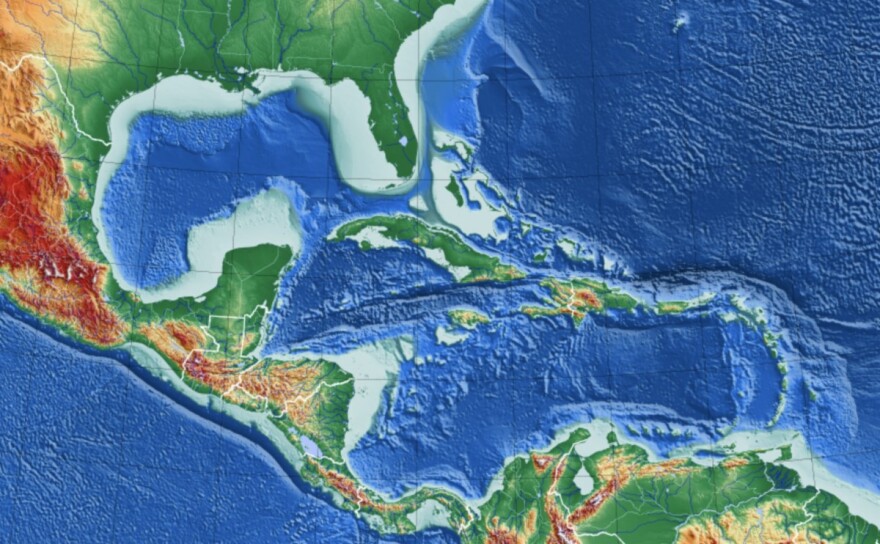
Colorful map of gulf waters between the U.S., Mexico and Cuba. The water is blue and the the land is green.
A team of international scientists from along the Gulf of Mexico in the U.S., Mexico, and Cuba recently met to start addressing the socioeconomic impacts of ocean acidification – that’s when carbon dioxide from the atmosphere changes the pH balance of a water body.

A team of international scientists from along the Gulf of Mexico in the U.S., Mexico, and Cuba recently met to start addressing the socioeconomic impacts of ocean acidification — that’s when carbon dioxide from the atmosphere changes the pH balance of a water body.

Jorge Brenner, the executive director of the Gulf of Mexico Coastal Ocean Observing System, said that the more acidic water becomes, the more difficult it is for some marine organisms to produce hardened structures.

“In the case of [an] oyster, well, that’s the shell. In the case of a shrimp, that’s the exoskeleton. The case of a coral is the whole organism that depends on the structure that they create. So, as water becomes more acidic, those structures might be more brittle and not able to be as hard as they typically are in more neutral waters,” Brenner said.

He said acidification is “not terribly bad right now” in the Gulf, but due to climate change, the water will likely become more acidic in the future. Brenner added that the water moves and is continuous, so it’s not going to be the same everywhere along the Gulf.

“Different shallow areas, or deeper areas, or areas where there is more current and water masses move more might have a better way to cope with acidification,” Brenner said.

Continue reading ‘Scientists from the U.S., Mexico, and Cuba met to start combating acidification in the Gulf of Mexico’

Surveying ocean acidification on the Northwest Atlantic shelf

In August of 2022, Prof. Samantha Siedlecki and Prof. Craig Tobias, along with students Halle Berger and Alex Frenzel, went on the East Coast Ocean Acidification Cruise (ECOA-3). The cruise was led by scientists at the University of New Hampshire, joined through transdisciplinary partnerships with other universities, aboard the NOAA Ship Ronald H. Brown. The UConn Avery Point members joined the cruise to investigate the contribution of sediments to carbon chemistry and how that ultimately impacts ocean acidification.

Core-team
“Core team” on the deck of NOAA Ship Ronald H. Brown with multi-core sampler. Left to right: Halle Berger, Samantha Siedlecki, Craig Tobias, Alex Frenzel

Sam, Craig, Halle and Alex were the sediment coring team. The cores go all the way down to the bottom of the ocean and collect both the upper part of the sediment and the layer of water above it. This way, it is possible to understand chemical reactions in this zone between the sediments and the water above it. “The idea here is to understand how sediments control the chemistry of bottom water. There are sediment reactions that could help buffer acidity. But it’s unclear how sediments talk to the water above it or how that communication might change in the future” says Craig. You can learn more on the Facebook page of research vessel Ronald H. Brown.

These measurements are valuable information because they are not only timestamps of what is happening at the moment of collection. Increasing the number of observations and fine-tuning the measurements of these chemical processes in bottom waters helps the research of modelers, like Sam. Models are important to test our understanding of ocean processes. We need more measurements like this to more accurately predict marine climate change. Part of Sam’s work is to use this information into regional ocean models to better constrain the role of sediments in the chemistry of the ocean.

Continue reading ‘Surveying ocean acidification on the Northwest Atlantic shelf’

PhDs study pH levels that could threaten fragile ecosystem of 17 separate reefs and banks along the Texas Gulf Coast

Porco_Rosso/Shutterstock

Is ocean acidification affecting the Texas coast’s Flower Garden Banks National Marine Sanctuary? Texas A&M University scientists collected data Oct. 25­–28 in the Gulf of Mexico to help answer this question and more, as the fate of the unique and fragile Flower Garden Banks ecosystem is potentially threatened by climate change and acidification.

“Ocean acidification is a process that affects the entire ocean and is driven by the combined effects of climate change and CO2 emissions, which are believed to increase to oceanic pH levels,” said cruise chief scientist Steven DiMarco, professor in Texas A&M’s Department of Oceanography and Department of Ocean Engineering, and Geochemical and Environmental Research Group (GERG) scientist.

Funded by the Ocean Acidification Program of the National Oceanographic and Atmospheric Administration and sailing on the RV Pelican, the four-day research cruise investigated the impact of ocean acidification in the coastal ocean environmental of the northwestern Gulf of Mexico. It is the third of four planned cruises, with two completed in 2021 and one upcoming in February 2023.

“The decreased pH levels can have catastrophic effect on marine organisms, particularly calcifying organisms that build and maintain shells, skeletons, and calcium carbonate structures,” DiMarco said.

Located about 100 miles off the coasts of Texas and Louisiana, the Flower Garden Banks sanctuary spans 17 separate reefs and banks, including thriving shallow-water coral reefs, algal-sponge communities, and deeper mesophotic reefs full of black coral, octocoral and algal nodule habitats. Together, the reefs create a chain of protected habitats for ecologically and economically important species across the northwestern Gulf of Mexico.

Continue reading ‘PhDs study pH levels that could threaten fragile ecosystem of 17 separate reefs and banks along the Texas Gulf Coast’

Here’s why the West Coast Dungeness crab season has been delayed

crab.jpg
A crab pot with caught Dungeness crab inside, off the port of Port Orford.

Oregon’s most valuable commercial fishery, Dungeness crab, will have its season delayed from its traditional Dec. 1 start date because of low meat yields.

Testing shows the crabs in some ocean areas off the West Coast don’t have enough meat in them to satisfy the commercial market.

In some areas, testing also showed elevated levels of the naturally occurring toxin domoic acid, which can make the crabs unsafe to eat.

Carin Braby, marine resources program manager with the Oregon Department of Fish and Wildlife, said officials will continue to test for meat yield and domoic acid in the coming weeks, and the results will determine whether the season needs to be delayed beyond Dec. 16. Right now, she said, some parts of the Oregon coast still have biotoxins from a big biotoxin event this fall, and other areas have crabs with low meat fill.

Hugh Link, the outgoing director of the Oregon Dungeness Crab Commission, said it’s better for everyone involved in the industry if the meat yield is high before fishing begins.

“We like to wait until they’re ready with the best possible meat fill before we open up the season,” he said. “It’s a win-win-win for everybody, the fishermen, the processors and the consumer.”

Braby said phytoplankton blooms happen every year, but now they are often accompanied by harmful algal blooms that produce the domoic acid toxin.

“The research that’s been done on those suggests that we will see that more and more with climate change,” she said. “The warmer conditions and the acidified water will promote the harmful algal bloom species and the toxin production. It’s going to get incrementally worse.

Continue reading ‘Here’s why the West Coast Dungeness crab season has been delayed’

Role of government in ocean acidification

The oceans are more acidic now than they have been for at least 300m years, due to carbon dioxide emissions from burning fossil fuels, and a mass extinction of key species may already be almost inevitable as a result, leading marine scientists warning the general public and government to take action. An international audit of the health of the oceans has found that overfishing and pollution are also contributing to the crisis. In the warning yet of the threat to ocean health, the International Programme on the State of the Ocean (IPSO) said: “This [acidification] is unprecedented in the Earth’s known history. We are entering an unknown territory of marine ecosystem change, and exposing organisms to intolerable evolutionary pressure. The next mass extinction may have already begun.” 

Continue reading ‘Role of government in ocean acidification’

Coral reefs near Texas may not escape greater damage from climate change

Lobed star coral, a threatened species at Flower Garden Banks National Marine Sanctuary. National Ocean Service (NOS)

Coral reefs in the Flower Garden Banks National Marine Sanctuary 100 miles off the Texas coast have remained healthier than many of their counterparts around the world in the face of climate change. But warming waters in the Gulf of Mexico could change that, warn scientists at Rice University, the University of Colorado Boulder and Louisiana State University in a recent paper in the Journal of Geophysical Research (JGR) Biosciences.

The researchers used models maintained by the National Center for Atmospheric Research to simulate climate warming from 2015 to 2100 under two scenarios. The first was “business as usual,” with very high emissions, and the second involved reduction of emissions to high levels. An analysis of regional warming patterns in each suggested the Gulf of Mexico could see critically warm temperatures as early as 2050. The key determinant of coral mortality in each scenario is the number of months corals are exposed to prolonged temperatures hotter than the hottest average months projected for 2015-2034.

One of the clear findings is that it matters which scenario prevails, according to Sylvia Dee, a climate modeling expert at Rice University and one of the authors, who spoke with Texas Climate News. The research indicates that curbing emissions during the next 10 to 20 years could make a big difference for these reefs.

Reef-building hard corals host photosynthetic algae that help feed the coral organisms. Corals also rely on carbonate minerals in seawater to construct their hard skeletons. Climate-change-related warming temperatures and increased acidification in the ocean threaten these processes. Prolonged, abnormally warm temperatures, for example, can cause corals to expel their algae, a phenomenon known as bleaching. If water temperatures drop, corals take back the algae and recover. If temperatures remain high enough, corals eventually starve.

Continue reading ‘Coral reefs near Texas may not escape greater damage from climate change’

Greenhouse gas concentrations higher than in all of human civilisation

The latest data from the Copernicus Climate Change Service shows that Europe just had the warmest October on record, with temperatures almost two degrees above the 1991-2020 average.

The warming that we are seeing here on land would be even more rapid if it wasn’t for the oceans. It’s calculated that they are absorbing up to 90% of the excess heat in the atmosphere trapped by greenhouse gases. And they are suffering.

The Mediterranean has suffered repeated heatwaves over the past couple of years and Jean-Pierre Gattuso, the CNRS Research Director, at the Laboratoire D’océanographie De Villefranche-Sur-Mer describes what impact that is having.

“The main effect of marine heat waves is massive mortality of invertebrates and plants, mollusks, sponges, and corals. Between the surface and 50 metres in depth, there are many invertebrates and plants that are affected negatively and die.”

Euronews
Marine life in the Mediterranean under threat from successive heatwaves

But do the decisions that are taken at COP27, make any difference and are they really going to change things like acidification and heatwaves? Jean-Pierre Gattuso again. 

“The negotiations that are taking place at COP 27 are obviously extremely important. The scenarios that are being projected by the IPCC (The Intergovernmental Panel on Climate Change) show that if the Paris agreement is implemented quickly and fully, we can stabilize temperatures and ocean acidification. This does not mean that we will return to the situation as it was before. It means we can stop the warming and stop the increase in acidity.”

The atmosphere at COP27 is business-like because everybody knows that the window is closing to reach the goals of the Paris Agreement and limit global warming to well below two degrees Celsius.

Continue reading ‘Greenhouse gas concentrations higher than in all of human civilisation’

Ocean acidification: COP27 event highlights IAEA capacity building to help African communities at risk

Scene from the IAEA side event on Ocean Acidification Adaptation and Resilience in Africa, held at its #Atoms4Climate pavilion at COP27. (Photo: A.Evrensel/IAEA)

The ocean plays a major role in the carbon cycle and absorbs about 30 per cent of all human-made CO2 emitted into the atmosphere each year. Over the last few decades, the amount of CO2 released due to human activities, such as the burning of fossil fuels and deforestation, has drastically increased. As a result, the chemistry of the ocean is changing, which can have lasting effects on the health of marine organisms and ecosystems, and subsequently for populations who depend on these for their livelihoods. 

Nuclear and isotopic techniques can help assess the impacts of ocean acidification on the livelihoods of coastal African populations, participants heard at an IAEA event on the sidelines of the 27th Annual UN Climate Change Conference, COP27, today.

Coastal areas that already face issues such as overfishing, pollution and habitat destruction are at high risk of being affected by ocean acidification. In Africa, fisheries and aquaculture currently contribute around USD $24 billion to the economy, employing more than 12 million people and providing sustenance to millions of people around the continent. Additionally, demand for fish and ocean products has increased significantly and is expected to further increase 30 per cent by 2030. The combination of already delicate ocean health and ocean acidification puts communities that are heavily reliant on fisheries and ocean products – mostly rural coastal African populations – at significant risk.

“Isotopic techniques are very powerful methods to assess ocean acidification risk to marine organisms and ecosystems,” said Jana Friedrich, Head of the Radioecology Laboratory at the IAEA Marine Environment Laboratories. “Accurate data allows us to better equip regional communities with the means necessary to address the impacts of ocean acidification, for example on local seafood species and their habitats.”

Continue reading ‘Ocean acidification: COP27 event highlights IAEA capacity building to help African communities at risk’

The 5 biggest threats to West Africa’s oceans – and what to do about them

Plastic bottles and other waste are some of the contaminants destroying the oceans. Issouf Sanogo/AFP via Getty Images

The natural resources that form ocean ecosystems can play a significant role in the socio-economic growth and development of nations.

West Africa has a variety of marine and coastal ecosystems, found within the Atlantic Ocean. This is one of the most diverse and economically important fishing zones in the world and provides an income for many through fishing, shipping, logistics and mining.

But unregulated and unsustainable exploitation has degraded the ecosystems severely. Threats have come from land based sources of pollution, insecurity and piracy, illegal and harmful fishing practices, and climate change.

These multiple stressors have had a negative impact on the ecological integrity and health of West Africa. They are causing an alarming decline in fishery resources, loss of coral reefs and seashells, coastal erosion, ocean acidity and rising sea levels.

Continue reading ‘The 5 biggest threats to West Africa’s oceans – and what to do about them

The Mediterranean Sea is so hot, it’s forming carbonate crystals

PHOTOGRAPH: HARRIS DRO/GETTY IMAGES

If you stand on the coast of Israel and gaze out across the Mediterranean Sea, you’ll spy deep-blue, calm waters that have sustained humans for millennia. Beneath the surface, though, something odd is unfolding: A process called stratification is messing with the way the sea processes carbon dioxide.

Think of this part of the Mediterranean as a cake made of liquid, essentially. Fierce sunlight heats the top layer of water that sits on cooler, deeper layers below. Out in the open ocean, where water temperatures are lower, CO2 dissolves in saltwater—which is what allows Earth’s seas to collectively absorb a quarter of the carbon emissions that humans pump into the atmosphere. But as the eastern Mediterranean Sea heats up in the summer, it can no longer absorb that gas and instead starts releasing it.

It’s the same thing that happens in a bottle of soda that is carbonated with carbon dioxide. “You usually keep it cold, so the dissolved gasses will stay dissolved,” says Or Bialik, a geoscientist at the University of Münster in Germany. “If you leave it in your car for a while and try to open it, all the gasses are going to pop out at once, because when it warms, the capacity of the fluid to hold CO2 goes down.” Boomfizz, you’ve got a mess on your hands. 

In the Eastern Mediterranean, this dynamic is rather more consequential for the climate than a sticky car interior, as the sea begins burping up great quantities of CO2 that the water can no longer hold. And Bialik and his colleagues have discovered that these warming, stratifying waters teem with a second carbon problem: The team recently caught aragonite crystals in sediment traps. Aragonite is a form of calcium carbonate, which oceanic creatures like snails use to build their shells. Except in the increasingly hot Eastern Mediterranean, the aragonite is forming abiotically. That’s another sign that the water is getting so warm that it’s releasing its carbon load.

In these hot, shallow, stable waters, the fluid on top doesn’t mix much with the underlying colder layers, in contrast to deeper parts of the ocean, where upwelling brings up cooler H2O. “The conditions are so extreme that we can definitely generate calcium carbonate chemically from these waters, which was kind of a shock for us,” says Bialik, who coauthored a recent paper describing the discovery in the journal Scientific Reports. (He did the research while at the University of Malta and University of Haifa.) “It’s basically like a beaker that sits there for a very long time, and it’s long enough to get these reactions going and start generating these crystals.”

Continue reading ‘The Mediterranean Sea is so hot, it’s forming carbonate crystals’

Subscribe

Search

  • Reset

OA-ICC Highlights

Resources